The newly constructed Sentry Bridge in Watkins Glen State Park offers a striking cantilevered design that celebrates the region's natural beauty.
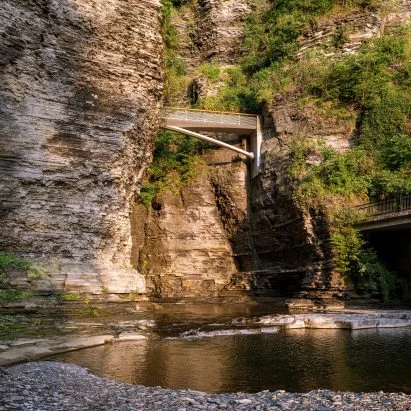
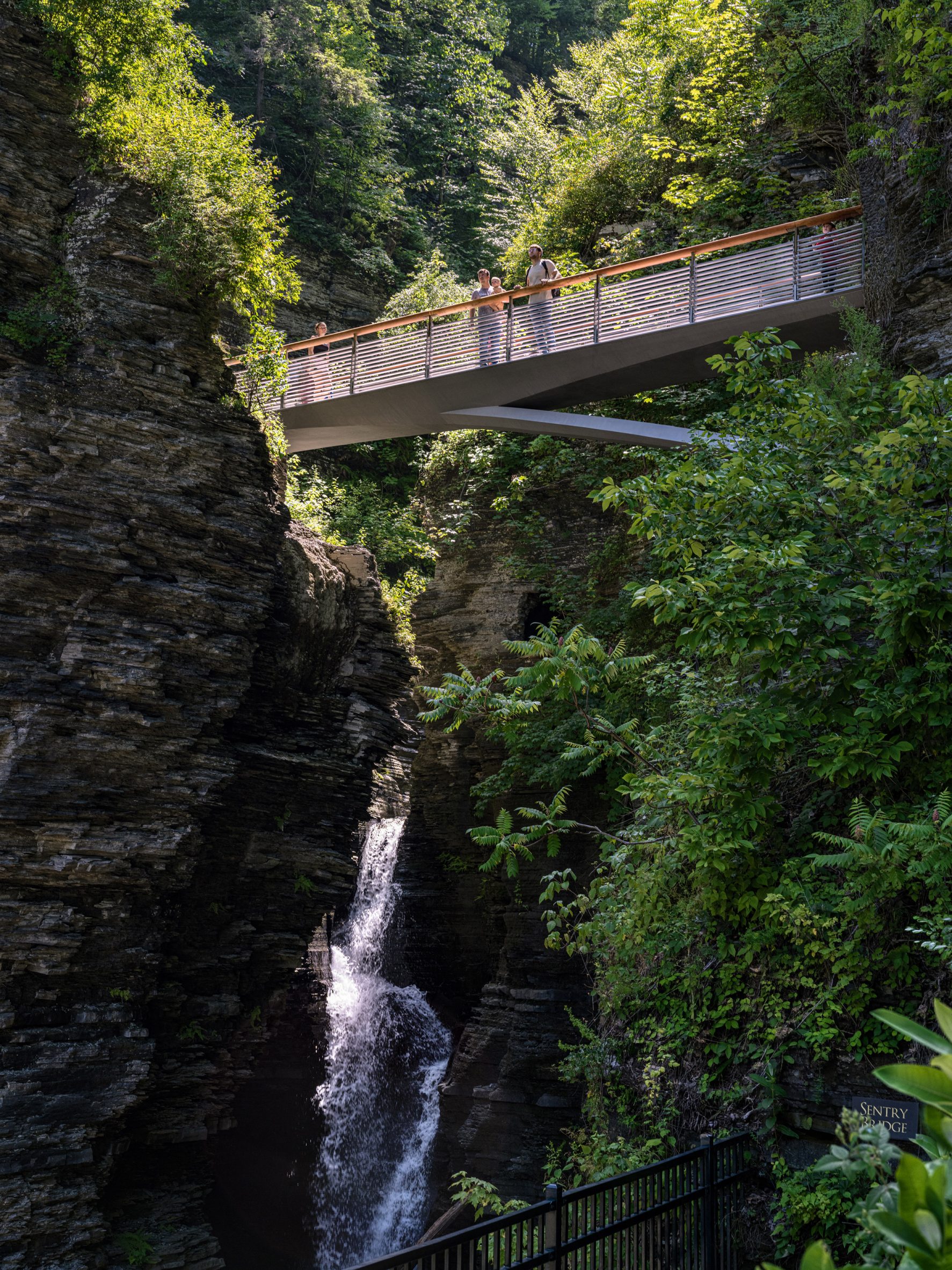
The Sentry Bridge, designed by Schlaich Bergermann Partner and Snøhetta, replaces an aging structure in Watkins Glen State Park, located in the picturesque Finger Lakes region of New York. This half-arch bridge is uniquely anchored on one side of a steep gorge, creating a dramatic cantilever that extends 46 feet (14 meters) across to the opposite side. The bridge is not just a functional necessity but also a statement of modern engineering and design in a location rich with historical significance.
Design and Materials
The Sentry Bridge is constructed from locally sourced stainless steel, primarily attached to the stronger north side of the gorge. This strategic design choice enhances the bridge's stability while minimizing the ecological footprint of the installation. Using local materials doesn’t just cut transport emissions; it also allows the structure to align with its surroundings, resonating with the regional identity.
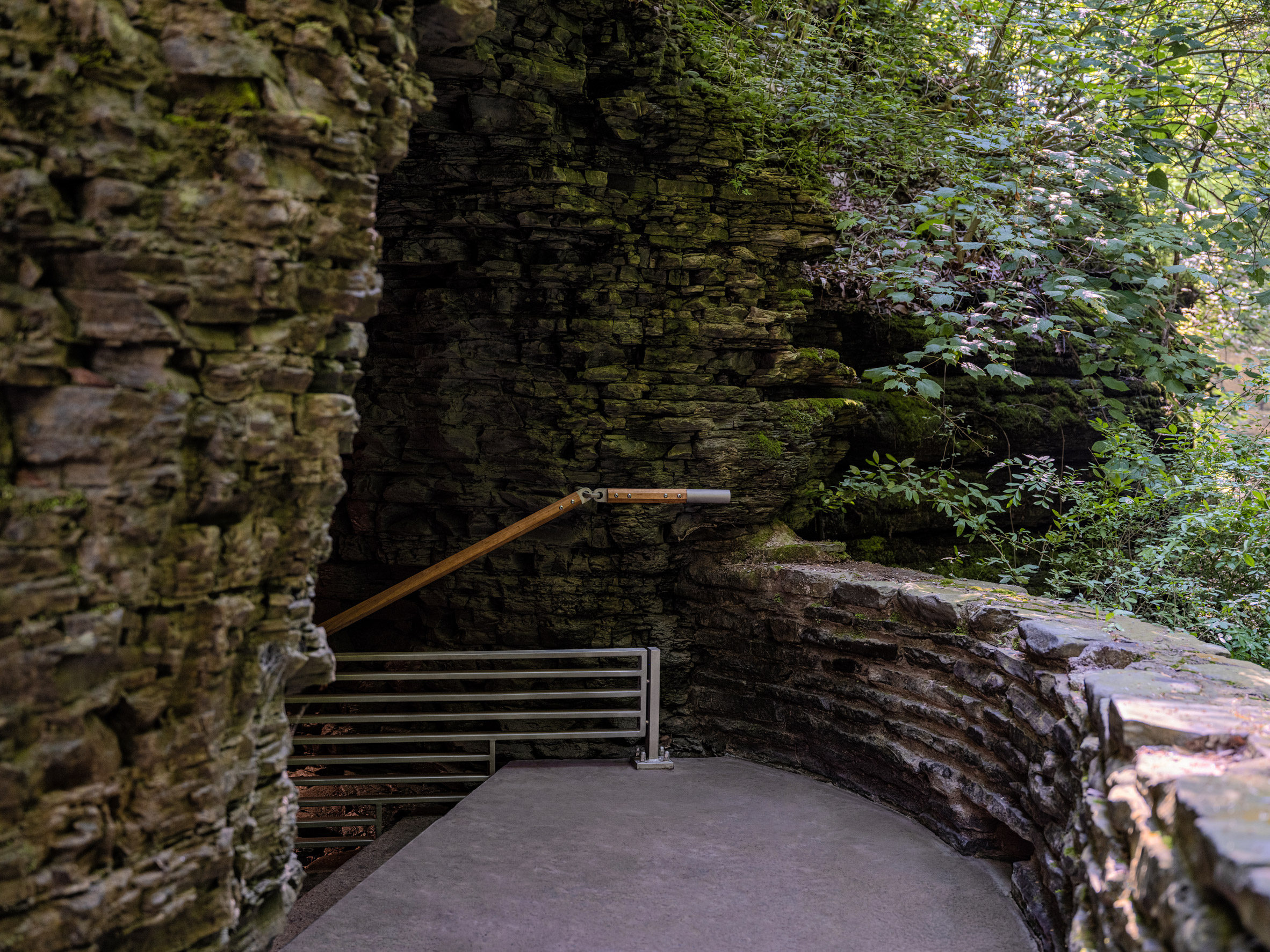
The bridge's components were prefabricated before installation on-site, a method intended to reduce disruption to the fragile ecosystem of Watkins Glen. The choice of black locust wood for the railings, known for its resistance to decay, along with rough-sawn hemlock concrete for the decking, is both aesthetically pleasing and functional. This combination is particularly significant given the harsh weather conditions and the importance of durability in a heavily trafficked park.
Cultural and Environmental Integration
The project emphasizes the rich history and cultural context of the gorge, integrating bronze castings that depict local flora and fauna—including an endangered dragonfly and unique plants. These design elements not only serve as artistic features but also act as educational tools, inviting visitors to engage meaningfully with the heritage of the area. The integration of cultural nods into the architecture can transform a mere crossing point into a narrative space, where each step becomes an invitation to pause and reflect on the natural world.
Project director Matt McMahon from Snøhetta remarked, "The bridge and pathways honor the histories and craft traditions of the gorge while protecting its unique ecosystems." This thoughtful integration highlights how architecture can enhance environmental appreciation. It's this kind of sensitivity that sets apart modern infrastructure projects from the often utilitarian designs of the past.
Future Implications
With the completion of the Sentry Bridge, both Schlaich Bergermann Partner and Snøhetta have demonstrated how a well-considered structure can facilitate pedestrian access while preserving delicate ecosystems. Michael Stein, managing director of SBP, stated, "This bridge exemplifies how thoughtful engineering can support both performance and experience." Yet, the design does more than meet practical needs; it adds aesthetic value to the park, enhancing the experience for all who visit.
As parks across the nation look to upgrade infrastructures, the Sentry Bridge may serve as a case study in environmental sensitivity and architectural finesse. Projects like this can establish benchmarks for how future endeavors should balance human activity with the preservation of ecosystems. Yet, it's crucial to remain cautious of potential overreach in such projects, where the line between accessibility and intrusion may become blurred.
The Takeaway: Significance and Broader Implications
What this means for you, if you're in the architectural space or a decision-maker for public projects, is clear. The Sentry Bridge doesn’t just solve a problem; it raises the bar for environmental responsibility. The focus on local materials and integration of cultural features presents a compelling case for similar projects across the country.
The model set here could influence how cities and parks approach the challenge of modernizing existing infrastructures. The success of designs like the Sentry Bridge could very well lead to increased investment in sustainable, thoughtful public works, particularly as climate concerns take center stage in our collective consciousness. And let’s face it: more projects that respect and honor the environment are desperately needed.
Photographs by Barrett Doherty
Discussion
Sign in to join the discussion.