A 5-acre Lakewood Center property leased to Burlington, 24 Hour Fitness and Bank of America sold for $37.3 million, following a $38.7 million center sale.
Two sales, one center
The notable figure here is the $76 million Faris Lee has brokered from two Lakewood Center sales this year. The latest deal accounts for $37.3 million of that total, slightly less than half. That makes the combined figure a useful measure of brokerage activity at the center, though it doesn’t by itself explain the properties’ performance or the sellers’ reasons for transacting.
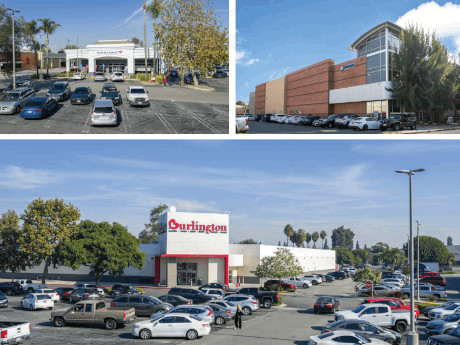
Burlington, 24 Hour Fitness and Bank of America occupy the 97,319-square-foot portion of Lakewood Center that sold for $37.3 million. Those tenants represent distinct everyday uses: retail shopping, fitness and banking. The property’s reported size and tenant lineup give a basic picture of what changed hands, but the available details don’t establish lease terms, occupancy beyond those named tenants, or how the space is configured.
A second major sale this year
Faris Lee Investments arranged the sale of the 5-acre property in Lakewood, California. A consortium of owners sold it to a buyer whose identity wasn’t disclosed. Don MacLellan, Jeff Conover, Scott DeYoung and Greg Lukosky of Faris Lee represented the sellers. The buyer’s identity and the transaction’s other financial terms aren’t provided, so the reported sale price remains the clearest measure of the deal’s scale.
The brokerage’s earlier Lakewood Center transaction involved two retail properties and brought in $38.7 million. Together, the two sales this year total $76 million. That’s a substantial run of activity at one center, though the available details don’t explain why the owners chose to sell in separate transactions. The difference in reported prices also can’t be read as a direct comparison of value: the deals involved different properties, and the source doesn’t provide enough information about their size, tenancy or other terms to support that conclusion.
Here’s the thing: two deals at the same shopping center can attract attention because they show that separate pieces of a large property can be marketed and sold on their own. But a pair of closings doesn’t establish a broader trend in buyer demand. The transactions may reflect the characteristics of these particular assets, the owners’ plans, or factors not described in the available reporting. No clear answer on that point.
A major retail crossroads
Lakewood Center spans a full city block and sits at four major signalized intersections. Costco, Target, The Home Depot and Albertsons are among the center’s other major retailers. That collection of tenants places the latest sale within a wider retail setting, but it doesn’t mean those other stores were part of the transaction. The reported sale covers a 5-acre property, including 97,319 square feet occupied by Burlington, 24 Hour Fitness and Bank of America.
For investors, the sale’s tenant mix—discount retail, fitness and banking—offers a snapshot of the uses represented in this particular slice of the larger center. Those categories can serve different customer needs and bring different operating considerations, so the mix may be relevant when assessing how a property fits into a broader shopping destination. Still, the source doesn’t describe the tenants’ lease durations, sales, renewal plans or individual space sizes. Any account of the property’s income or future leasing prospects would need those details.
And yet, the setting matters. A site at several major intersections may offer visibility and access, while the presence of major retailers elsewhere at the center can help explain why this address attracts attention. Those are general considerations in retail property analysis, not proof of a particular advantage for this property. If you’re working in this space, the distinction between the center’s overall profile and the sold parcel’s own fundamentals is the one to keep in view.
What the activity does—and doesn’t—show
The $76 million combined total is a useful headline, and this is more significant than it looks as a measure of transaction activity concentrated at one center. It indicates that two separate Lakewood Center transactions were completed through Faris Lee this year. It doesn’t show that the entire center changed hands, that the same buyer participated in both deals, or that the sales were part of a coordinated disposal. The source identifies a consortium of sellers and an undisclosed buyer for the latest sale, but provides no comparable ownership details for the earlier transaction.
That said, the latest deal offers a concrete point of reference: a 5-acre property with a reported 97,319 square feet and three named occupants sold for $37.3 million. Readers can use those facts to understand the scale and basic tenant profile of the asset. They can’t use the price alone to infer the property’s profitability, the terms of the leases or whether the transaction signals stronger pricing across the wider retail market. Those questions require information that hasn’t been reported here.
The next useful details would be the buyer’s identity, the transaction terms and any account of the seller’s rationale, if they become available. Until then, the strongest conclusion is a narrow one: Faris Lee arranged two sales at Lakewood Center this year, with a combined reported value of $76 million, and the newer transaction involved a multi-tenant retail property in a prominent part of the center.
Discussion
Sign in to join the discussion.