Tatiana Bilbao Estudio’s Hudson Valley soil installation is designed to erode over about two years at Art Omi’s sculpture park.
Earth meant to return to the ground
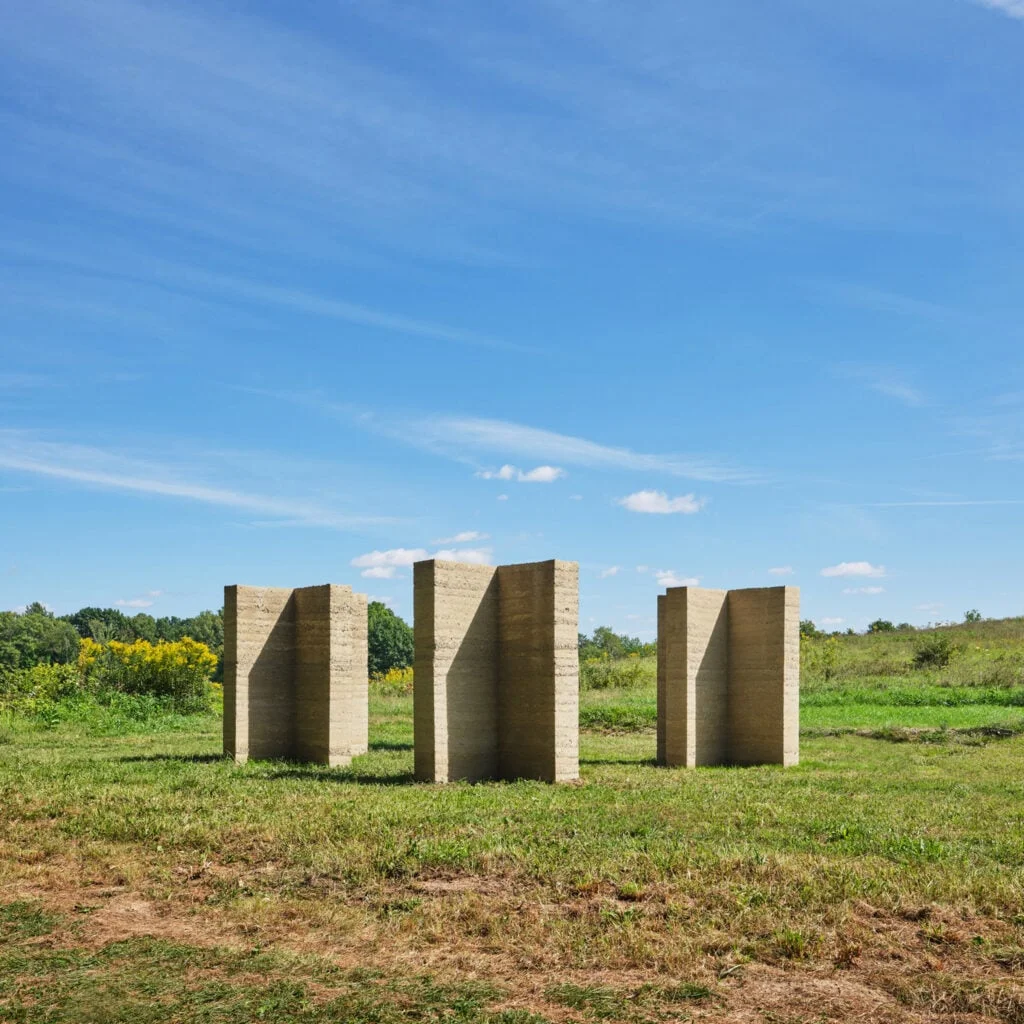
The point of Borrowed Earth is its limited lifespan. Tatiana Bilbao Estudio, the Mexico-based practice, made the outdoor installation for New York arts centre Art Omi from soil gathered nearby, with the work expected to erode over time. That planned decay gives the piece a different kind of presence: it’s built to feel solid while making its eventual disappearance part of the idea. The title makes that exchange explicit: the material has been taken from the surrounding ground for a temporary use, and the work is expected to give it back in altered form.
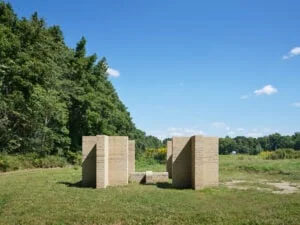
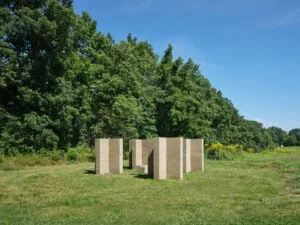
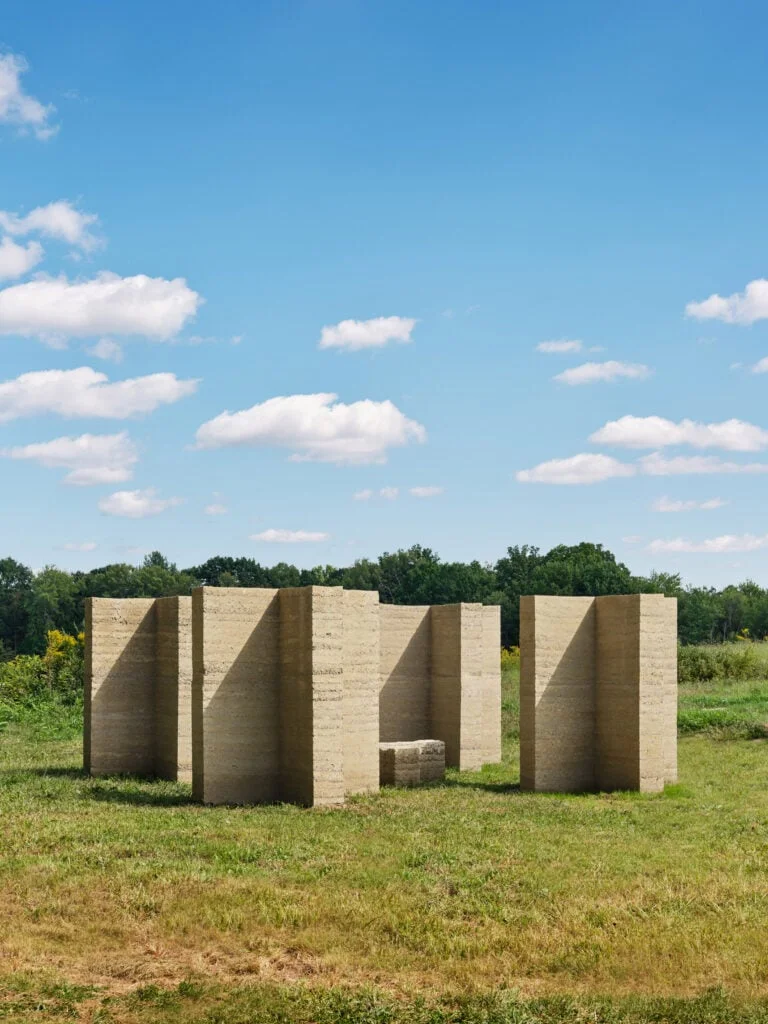
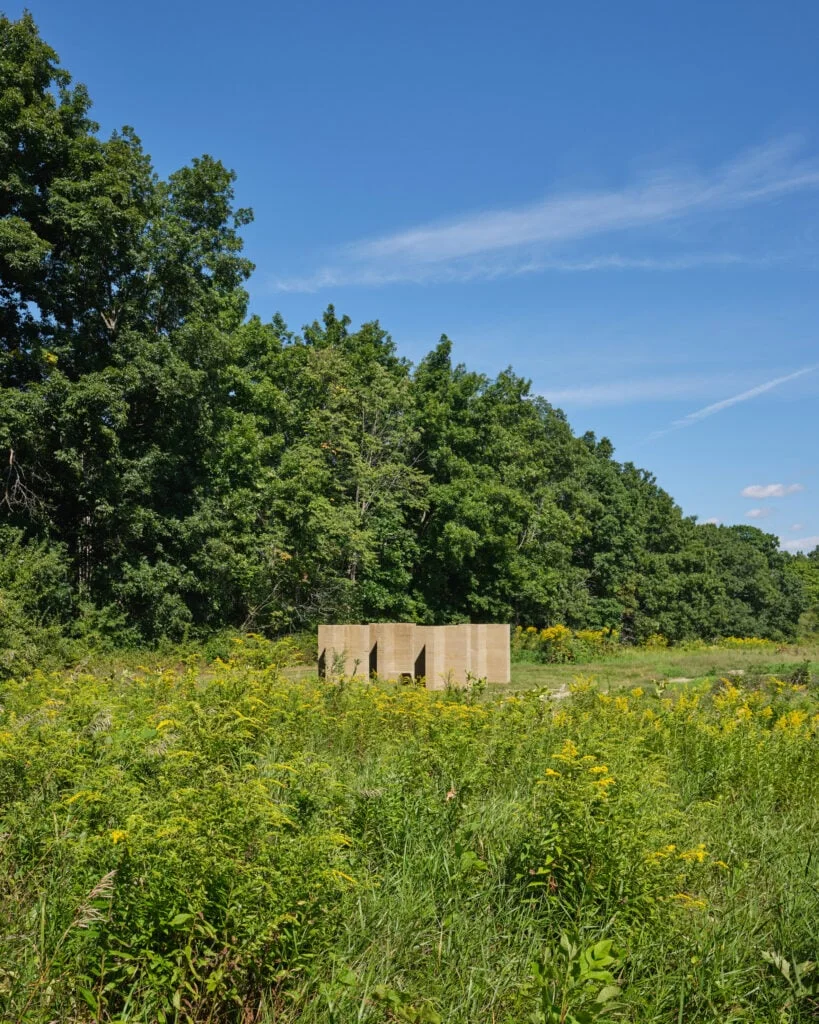
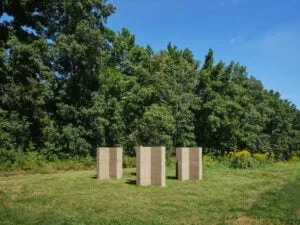
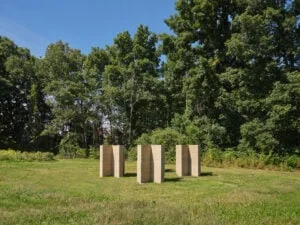
Four rammed-earth crosses, each 7.5 feet tall, stand around a shorter cross-shaped bench. The forms use compacted soil from the Hudson Valley. Tatiana Bilbao Estudio and the studio’s website describe a design developed from a “repeatable basic unit,” which became both the bench and the surrounding columns. Rammed earth is the material that ties those repeated forms to the site. Repetition gives the group a clear order, while the change in height distinguishes the central place to sit from the taller elements around it. The installation reads as a small spatial arrangement rather than a single object set down in the park.
That choice of material also changes how visitors read permanence. Rammed earth is made by compacting soil into a form, so its finished surface can register the layers and texture of the material rather than conceal them behind a manufactured finish. Here, the visible earth is part of the work’s argument. It doesn’t promise the permanence associated with stone or metal; it asks visitors to consider what a structure means when its eventual breakdown is built into the design.
Form shaped by construction
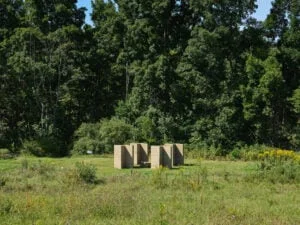
Art Omi commissioned the work for its 120-acre sculpture park in Ghent, New York. The cross forms emerged in part from the practical demands of building with rammed earth, curator Julia van den Hout told Dezeen. “They were not always crosses in our initial conversations,” she said. As the teams worked through construction and structural questions, the concept became a cruciform column. Van den Hout also said the shape appealed for its strong modernist character.
That history matters because it places the finished geometry between an artistic decision and a building method. The form wasn’t simply imposed on the material after the design was settled; construction questions helped determine what the piece became. The result carries that process into its appearance. Repeated crosses make a legible pattern, but their shape also signals that the work was negotiated through practical constraints.
For visitors, this is more significant than it looks. A sculpture can appear self-contained, as if its shape arrived fully formed, while the account of its making shows a less tidy sequence of choices. Here, the constraints of material and structure helped produce the visual language. That said, the modernist reference gives the crosses a familiar architectural register, which sits in productive tension with their rough, temporary substance.
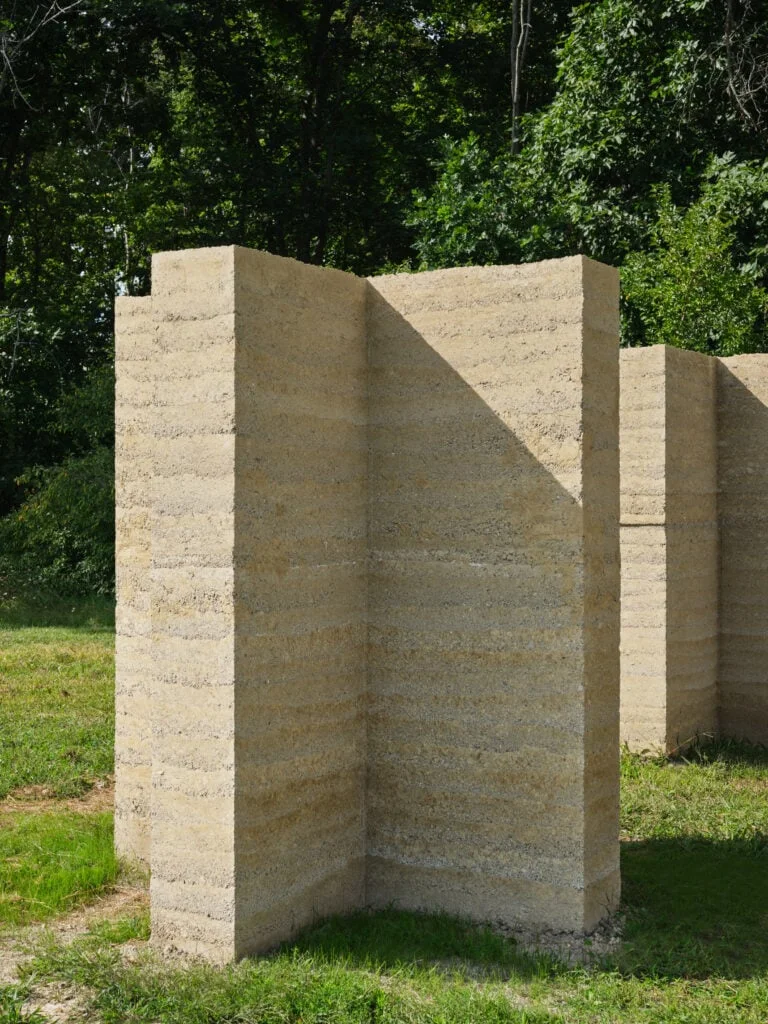
The Art Omi and Bilbao teams built the columns on site with advice from a rammed-earth consultant based in Mexico. Their soil came from a construction site nearby; they combined it with sand and lime, then tamped successive layers into wooden formwork. This description points to a method that depends on both material preparation and careful sequencing: the soil mixture is placed in layers and compacted while the formwork holds the intended shape. The finished columns therefore record a process of making, even if the design’s repeated unit gives the installation a clean overall order.
Using nearby soil gives the project a direct connection to its setting, though it doesn’t by itself prove that the installation has a smaller environmental impact than another construction approach. The source account establishes where the earth came from and how it was combined; it doesn’t provide a wider materials comparison. The more defensible point is that the work makes its material origin visible and treats that origin as part of the experience.
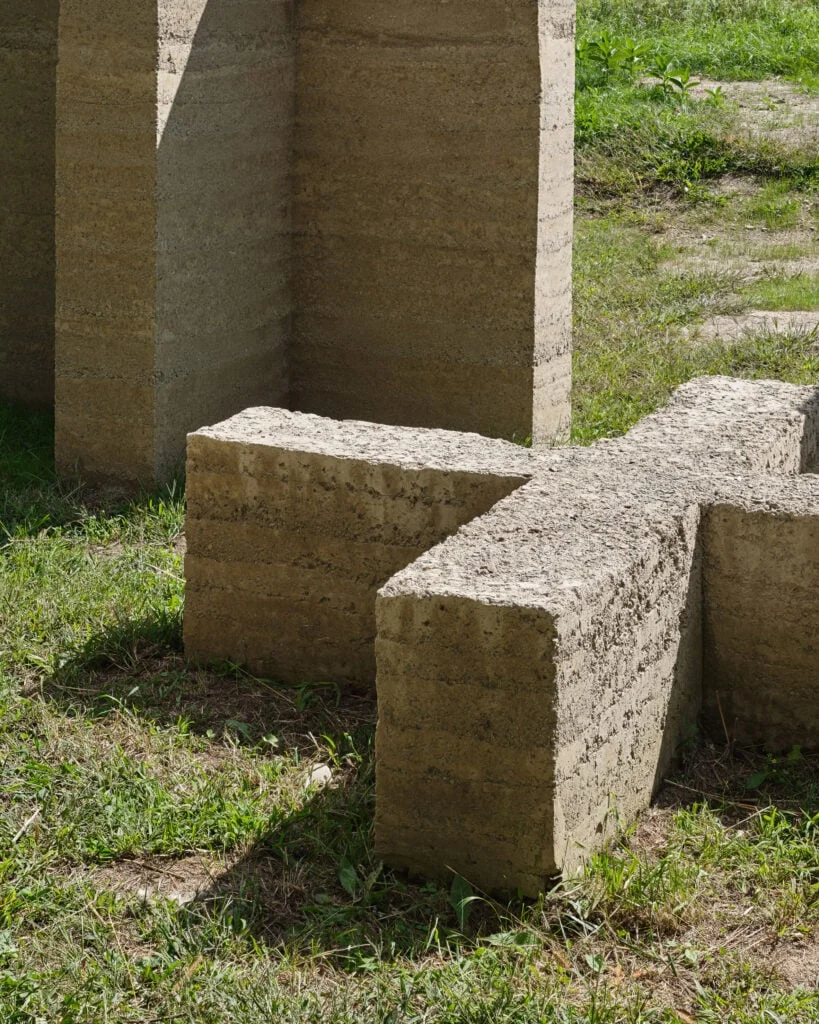
Van den Hout expects the installation to decay over roughly two years, but there’s no firm forecast because weather and other outdoor conditions will affect the pace. “It'll be an experiment,” she said. The material is soft and crumbles readily to the touch, yet the forms still feel stable. That tension is the piece’s most telling feature: its durability is something visitors can sense, even as erosion remains visible and expected.
The estimate sets an expectation, not a schedule. Exposure, moisture and other outdoor conditions can affect how an earthen structure changes, so the work’s appearance may shift unevenly rather than decline at a steady rate. That uncertainty is central to the installation’s premise. Its condition won’t be fixed for every visitor, and the material’s gradual change becomes part of what’s being observed.
Here’s the thing: temporary architecture can make time feel like a design material. A conventional monument asks to be read as a lasting marker; Borrowed Earth asks visitors to pay attention to what happens between its construction and eventual erosion. The result is deliberately unresolved. An experiment in public view.
What the installation leaves behind
Art Omi has also hosted work by MOS Architects, which made an aluminium sculpture for the park, and Young Projects, whose frayed wooden pavilion was installed there in 2024: MOS Architects’ sculpture and Young Projects’ pavilion. These examples place Bilbao’s installation within a programme that includes works made from different materials and with different relationships to weather and time. The comparison is limited by the available details, but it does show how a sculpture park can make material choices part of the public encounter.
Bilbao’s studio, primarily based in Mexico, completed a sprawling aquarium there in 2023. In 2019, it also spoke with Dezeen about a rising generation of prominent female architects in Mexico. Those references give a brief sense of the studio’s wider work and public profile, while Borrowed Earth offers a compact, temporary counterpart to a larger building project. The scale differs sharply, but both links situate the installation within an architectural practice rather than treating it as an isolated image.
If you're working in this space, the project offers a useful prompt: how much of a public artwork’s meaning comes from its finished form, and how much from the material’s behavior after opening day? There’s no simple answer in the source account, and the two-year estimate remains uncertain. What it does establish is that the work was conceived with change in mind, built from local soil, and shaped through construction decisions that helped determine its form.
The post Tatiana Bilbao creates rammed-earth installation at Art Omi appeared first on Dezeen.
Discussion
Sign in to join the discussion.