An Orange County investor bought the 23,528-square-foot Moreno Valley center, with plans to improve the property and refine its tenant mix.
High occupancy gives Moreno Valley buyer room to refine the tenant mix
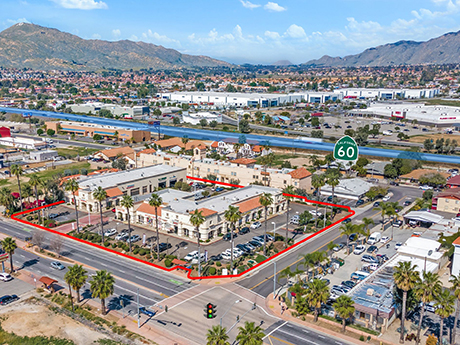
The 23,528-square-foot property at 24300–24320 Sunnymead Blvd. in Moreno Valley, California, sold for $3.1 million. Photo: Shopping Center Business.
A leased-up property with room for a new plan
The notable part of this Inland Empire deal is the combination of a 94 percent lease rate and a buyer who plans to improve the property and reshape its tenant mix over time. An Orange County-based private investor bought the multi-tenant retail site in a sale arranged by Progressive Real Estate Partners. The reported sale price was $3.1 million, and the property contains 23,528 square feet.
High occupancy gives the buyer an operating base from which to assess the center, but it doesn't tell the whole story. A lease rate describes how much space is occupied; it doesn't reveal the rent being paid, the length of each lease, the tenants’ financial health, or how much work the property needs. Those details matter when an owner decides whether to renew existing businesses, seek different operators, or invest in upgrades.
That distinction is especially relevant for a small multi-tenant property. A single vacant suite can have a visible effect on the occupancy figure, while a fully occupied center can still face lease expirations, maintenance demands, or mismatches between its spaces and the businesses looking for them. The 94 percent rate is a useful snapshot, not a full operating report.
Automotive tenants define the current identity
Existing tenants include Prieto Smog Center, Gina’s Auto Service, Lenny’s Auto Repair and No Limit Sounds & AC. That automotive-heavy roster gives the center a clear identity and suggests that its current customers come for specialized services rather than the broad, routine shopping associated with a general retail center. Businesses in this category can benefit from visibility and convenient access, while their space requirements may differ from those of shops selling smaller consumer goods.
The buyer’s stated interest in improving the property and reshaping its tenant mix leaves several practical questions unanswered. The available details don't say which businesses might be targeted, whether current tenants will remain, or what physical work the buyer has in mind. They also don't set out a timeline. For now, the plan is a direction, not a detailed redevelopment program.
Changing a tenant mix can involve more than filling an empty suite. Owners typically weigh a prospective tenant’s use, space needs, lease terms, and fit with neighboring businesses, along with any physical changes a space would require. A shift in the roster can take time because existing leases and the condition of individual units constrain when and how a new plan can be carried out.
What occupancy can—and can't—signal
In a neighborhood retail property, occupancy can support income and make the center appear active, but its value depends on the quality and durability of that occupancy. A cluster of businesses serving related needs may reinforce a destination: customers looking for vehicle service, for example, could have reason to visit more than one operator in the same area. That potential doesn't establish how often customers do so at this property, but it helps explain why an owner might see value in a coherent tenant roster.
There’s a trade-off. A recognizable specialty mix can distinguish a center, while a narrower range of uses may leave it more exposed if demand for those services changes. A broader mix can reach different customers, yet it may require new leasing work and property adjustments. Neither approach is automatically better; the right fit depends on the spaces, the local customer base, lease conditions, and the owner’s plans.
Here’s the thing: a high lease rate can make a property easier to operate while also reducing the number of immediate openings through which an owner can change its lineup. That means tenant strategy may depend on lease turnover and individual negotiations rather than a quick, center-wide reset. (And this is the part most people overlook.) A change in mix can unfold gradually, even when the buyer has a clear view of the direction.
Improvement depends on the details
The description of the buyer’s plan doesn't specify the scope of the improvements. In general, work at a multi-tenant retail property can range from upkeep and repairs to changes that make suites more suitable for different businesses. Without information about the building’s condition, the buyer’s budget, or the desired tenants, it would be premature to assume the project involves major construction or a particular use change.
The distinction matters because physical work and leasing plans affect one another. A potential tenant may need a space configured in a particular way, while an owner may prefer to complete work only after confirming that a business is interested. This can make the sequence of leasing and improvements an operating decision, not simply a matter of appearance.
For a buyer, the starting point is typically to understand the existing leases and the condition of the property, then weigh the cost and timing of changes against the income the center already produces. The source doesn't disclose the investor’s analysis, and the reported occupancy alone can’t establish whether the purchase price reflects a bargain, a premium, or a particular return target. The sale provides a few key facts, but not enough to judge the investment’s full economics.
Why the next phase matters
This is more significant than it looks: the deal pairs a nearly full center with a stated intention to alter its tenant mix, putting the focus on how an owner balances existing operations with future positioning. If you're working in this space, the useful question is how the buyer plans to retain income while making improvements and pursuing different tenants. The answer may depend on lease terms and property needs that haven't been reported.
For now, the center’s automotive businesses remain its clearest defining feature, and the 94 percent lease rate offers evidence of substantial occupancy at the time of the sale. The buyer has signaled an interest in change, but the details are still open. The test will be whether the eventual improvements and leasing decisions create a better fit for the property without undermining the income supported by its current tenants.
Not a finished story. The transaction establishes ownership and intent; the execution will determine whether the tenant mix actually evolves and what the improved property looks like.
Discussion
Sign in to join the discussion.