MAD's Shenzhen Bay Culture Square blends artistic innovation with accessible public spaces, redefining community engagement in Nanshan District.
Transforming Shenzhen’s Urban Space
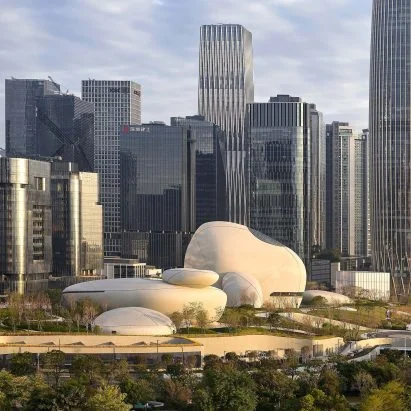
MAD has introduced Shenzhen Bay Culture Square in Shenzhen’s vibrant Nanshan District, characterized by its striking stone-like volumes atop a lush, undulating green roof. This project transforms a reclaimed coastal area into a cultural and design hub, with a commitment to enhancing public engagement. Situated at the intersection of nature and urbanization, it stands as a testament to how thoughtful design can reshape environments for community use. This endeavor also highlights the growing trend among global cities to reclaim derelict spaces for public benefit.
Architectural Vision and Community Integration
The design aims to foster a meaningful connection between nature and urban life. MAD founder Ma Yansong emphasizes the importance of creating public spaces that are inclusive and inviting. “Shenzhen is a young, efficient city, and this site was entirely reclaimed from the sea,” he noted. The architecture incorporates natural elements into a visionary experience while maintaining a scale that is both intimate and accessible to public use. This focus on community interaction presents a stark contrast to many contemporary developments that prioritize high-density construction over public spaces. In this light, the Shenzhen Bay Culture Square emerges as a radical counterpoint, inviting residents to experience their surroundings more holistically.
Structure and Features
Nestled between skyscrapers and Talent Park, the Shenzhen Bay Culture Square houses various facilities including exhibition galleries, educational spaces, a design library, and a multifunctional theatre. The architectural plan cleverly obscures much of the museum below ground, utilizing the green roof to provide winding pathways that connect urban dwellers to the scenic coastline. This underground option creates an ideal setting for exhibitions and educational programs while protecting visitors from the sometimes overwhelming cityscape. It reflects a nuanced understanding of how modern urban spaces can work harmoniously with natural topography.
Boulder-like Galleries and Sustainable Design
The above-ground structures, resembling polished granite boulders, vary in height, peaking at 28 meters for the gallery at the city end and tapering to a low-slung dome near the park. This strategic design not only integrates the museum into its surroundings but also minimizes impact on the migratory routes of local bird species. Sustainability isn't only a buzzword in this case; it manifests in the physicality of the design as well as the environmental consideration of local wildlife. By embracing sustainable architecture, the project exemplifies how modern constructions can prioritize ecological balance while serving urban communities.
Nature-Centric Approach
By blending the building with the landscape, MAD has crafted a park that encourages exploration and engagement. Visitors can enter from multiple points, ascend gentle slopes, and enjoy lookout areas offering stunning views over the bay. Indoors, exposed concrete structures are illuminated by skylights, enhancing the overall visitor experience. It's a significant design choice because it promotes a connection with the outdoors, allowing natural elements to permeate the indoor environment. This approach enhances not just aesthetic appeal but also fosters a sense of well-being, as studies often correlate access to natural light with increased visitor satisfaction.
Multi-functional Outdoor Spaces
Central to the plaza is a shallow pool, surrounded by flexible areas designed for performances, markets, and festivals. The landscape plan incorporates native plant species, gradually transitioning to the adjacent wetland, effectively merging the park and coastline without harsh demarcations. This type of design reflects an understanding that urban spaces can serve multiple functions beyond their immediate architectural narrative. By including various communal spaces, the designers create an arena for cultural expression, further embedding the square in the social fabric of Shenzhen itself. (And this is the part most people overlook: good design in urban environments lies not just in utility, but in the fostering of community spirit.)
Future Developments
Shenzhen Bay Culture Square is a key addition to MAD's growing portfolio in China, which also includes projects like a bulbous science museum in Haikou and a curving headquarters in Shenzhen. This museum not only reflects a commitment to culture and design but also redefines how urban spaces can work in harmony with natural ecosystems. The mixed-use aspects of the square hint at a burgeoning trend in urban planning: spaces that blend art, education, and recreation are gaining traction, especially in rapidly developing areas. If you're working in this space, keep an eye on how these projects evolve; they may signal a broader shift in urban design philosophy across major cities worldwide.
Implications for Urban Development
The Shenzhen Bay Culture Square signifies an important pivot in urban planning paradigms. As cities around the globe grapple with overpopulation and environmental sustainability, this project serves as both a blueprint and a challenge. It raises the question of how urban environments can coexist with—and even enhance—the natural world. By emphasizing green spaces and community engagement, MAD encourages a model that prioritizes public access and ecological mindfulness, which will likely influence future developments across urban centers. As cities increasingly turn their eyes to sustainability, Shenzhen Bay Culture Square stands as a beacon of what public spaces can achieve when design embraces both community needs and environmental responsibilities.
Photography credits: MAD.
Discussion
Sign in to join the discussion.