The Rike Concert Hall in Tbilisi, Georgia, is being demolished after remaining unopened since 2012, marking a significant cultural shift.
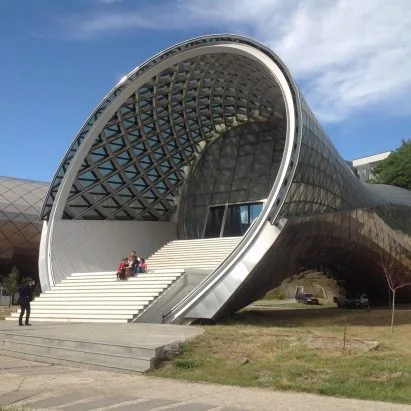
The demolition of the long-unopened Rike Concert Hall, designed by Studio Fuksas, has commenced in Tbilisi, Georgia. This structure has remained vacant since its completion in 2012, a symbol of unrealized potential in the city. With its striking design that was meant to echo the rhythms of music, its closure represents not just a physical loss, but a missed opportunity for cultural enrichment in Tbilisi.
Local news outlet TV Pirveli captured footage of the removal of the building's distinctive scale-like cladding, highlighting the ongoing transformation of the space. The permit for this demolition was issued just under two weeks before work began, signaling a sharp shift in Tbilisi's cultural environment. There's a sense of urgency in these changes, perhaps reflecting deeper tensions in the city about cultural investment and urban renewal. The decision to demolish rather than repurpose raises questions about what the future holds for other iconic structures in Tbilisi.
Architectural and Cultural Implications
Studio Fuksas publicly expressed that the demolition is a considerable cultural loss. Their statement reflects a broader dialogue about the value of architectural heritage in urban environments. Buildings like the Rike Concert Hall often encapsulate the aspirations and identity of a city. The closure of such a venue not only limits cultural events but also diminishes the city’s architectural tapestry. With ongoing discussions around architectural accountability, there's a growing sentiment that future projects must prioritize sustainability and practicality over mere aesthetics.
This isn't just about one building; it's about defining what a city represents. Losing the Rike Concert Hall forces Tbilisi to confront its vision. Will the city replace it with another ambitious project, or will it contribute to a cycle of similar failures? The stakes extend beyond this one instance, as they touch on the community's desire for vibrant public spaces that encourage interaction and creativity. This development starkly underlines the challenges faced by cities trying to balance development with cultural preservation.
Additional Cultural Developments
In related news, attention has turned to the Mackintosh Building at the Glasgow School of Art, which has been ravaged by fire. A recent campaign led by architect Ruairidh Moir is gaining traction, calling for governmental financial support to rebuild the structure. As of now, the petition has amassed nearly 9,000 signatures, aiming for a target of 100,000 to prompt action from both the Scottish and UK governments. It's a powerful reminder that the fate of significant cultural sites doesn't just rest upon the shoulders of local communities but often relies on governmental assistance and prioritization.
Such initiatives shed light on a broader issue: how communities mobilize in the face of loss. The passion behind the Mackintosh rebuilding effort demonstrates the deep-rooted connection individuals have with their architectural landscapes. When communities advocate for these sites, they highlight an urgency in cultural preservation that transcends mere bricks and mortar—it's about safeguarding identity and shared heritage.
Future Architectural Ventures
Elsewhere in the architectural community, MVRDV has unveiled plans for the Bihailou Art Village in Shenzhen, a vibrant cultural center comprising colorful stacked volumes. This project reflects a growing trend toward integrating art into daily urban life. Meanwhile, as the AI sector continues to grow, new data center designs are emerging, including a "vertical data center" proposal by SOM for Kansas City. This approach diverges from traditional sprawling data facilities, emphasizing efficient land use amid rapid urbanization.
It’s particularly fascinating to observe how different sectors of design are evolving. For instance, innovations in sustainability are evident in a unique design endeavor by researchers in China, introducing a self-renewing dress made from living mycelium. It’s an odd but fitting juxtaposition. While cultural venues face demolition, other realms are exploding with creativity and environmental consciousness. Former Queer Eye host Tan France's foray into furniture design signifies that even public figures see value in pushing boundaries within the design sector.
Projects Captivating Public Interest
Among recent projects that have caught the eye of the design community are a striking Passivhaus home by River Architects in Hudson Valley, a copper-clad concert hall in Evian designed by PCA-Stream, and a stunning cantilevered bridge in Upstate New York, a collaboration between SBP and Snøhetta, showcasing unique approaches to modern architecture. Each of these projects underscores an increasing demand for thoughtful design that resonates on multiple levels: aesthetic appeal, sustainability, and community engagement.
This isn't merely a passing trend. What’s happening in places like Hudson Valley and Evian reflects a growing awareness among architects that functionality and beauty go hand in hand. Engaging the public in the discourse surrounding these projects helps reinforce the notion that architecture plays a crucial role in shaping daily lives, influencing not just how communities interact, but how they envision their futures.
Future Outlook: Implications for Urban Development
The recent turn of events surrounding Tbilisi's Rike Concert Hall signals a pivotal moment for urban development across the globe. If you're working in this space, pay attention. The dialogues sparked by this demolition could become cornerstone discussions in cities seeking to not just grow, but grow thoughtfully. Developers may need to consider a more holistic approach to projects, where cultural viability is factored into the feasibility of new initiatives from the onset.
This transition may well play out with varying degrees of urgency in different cities. That said, the implications are clear: urban spaces need to become more than just the sum of their buildings; they need to foster a sense of community ownership and cultural relevance. The fate of structures like the Rike Concert Hall can often resonate far beyond their immediate context. The proactive steps taken by cities now will define their architectural narrative for generations to come.
This update on Dezeen
Stay updated with evolving architectural trends and significant projects by subscribing to our newsletters.
Discussion
Sign in to join the discussion.