The 43,071-square-foot Cincinnati retail and medical center sold for $7 million, or 99% of its asking price.
A near-asking-price sale for a mixed retail and medical center
Springdale Town Center sold for $7 million, a figure that stands out because the buyer paid 99 percent of the asking price. That suggests the seller’s pricing was close to what the market would bear, though the transaction details don’t explain what drove the buyer’s valuation. A sale near the asking price can indicate that a property was brought to market at a level buyers considered supportable, but it doesn’t establish how much competition there was or whether the seller made concessions elsewhere. The headline comparison is useful; by itself, it doesn’t tell the whole story.
That distinction matters in commercial property, where the accepted price is only one part of a transaction. A buyer’s view of value can reflect the rent coming in, the length and terms of leases, expected operating costs, the condition of the buildings and the property’s prospects for keeping tenants. None of those details is provided here. So the 99 percent figure is a clean measure of the relationship between asking price and sale price, but a limited measure of the center’s financial performance.
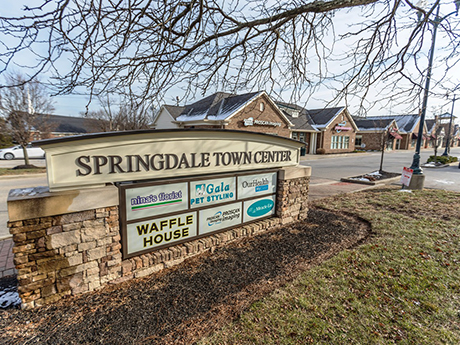
Springdale Town Center spans 43,071 square feet and combines retail with medical uses. Its 13 tenants include Waffle House, Republic Finance, Cincinnati Foot & Ankle Care, Marathon Healthy, Subway, Domino’s Pizza and Proscan Imaging. Built in 2007, the center brings together everyday food and service businesses with healthcare providers, giving the property a varied tenant mix. That mix can broaden the range of activity at a center, although tenant variety alone doesn’t show how evenly the rent is distributed or how much space each business occupies.
What the tenant mix can—and can’t—tell us
The listed businesses point to a property serving several routine needs: meals, financial services and medical care. Retail centers with service tenants often depend on the practical reasons customers visit, not simply on browsing or discretionary shopping. Medical providers can bring scheduled appointments, while food businesses may serve customers at different points in the day. Those uses may complement one another, but the article doesn’t provide traffic counts or other evidence to establish how customers use this particular center.
The tenant list also shouldn’t be mistaken for a full picture of occupancy. Thirteen tenants are identified, but there’s no stated vacancy rate, no breakdown of leased area and no indication of how many leases are approaching expiration. A center can have a varied roster and still face a concentrated risk if one tenant occupies a large share of the space or contributes a substantial share of rent. Conversely, a list of familiar businesses doesn’t tell us whether their leases are long, short, above market or below it.
That’s the part a property analyst would want to understand before treating the sale price as proof of durable demand. The mix offers a starting point for questions, not answers.
Why the operating details matter
For an income-producing property, buyers commonly assess rent, expenses and the reliability of future cash flow. Lease terms can shape that assessment: a tenant with time remaining on a lease may provide more near-term income certainty, while upcoming expirations can create both renewal risk and an opportunity to reset rent. The source gives no lease schedule, rents, operating expenses or net operating income for Springdale Town Center, so it’s not possible to connect the $7 million sale price to a yield or to compare the price with the center’s earnings.
Physical condition is another missing piece. The center was built in 2007, but that fact alone doesn’t establish the state of its roofs, mechanical systems, parking areas or tenant spaces. Nor does the article say whether the buyer expects to make improvements. In similar property transactions, deferred maintenance can affect the amount a buyer is willing to pay, while recent capital work may reduce near-term costs. Here, there’s no basis for saying either circumstance applied.
And yet, the absence of those details doesn’t erase the value of the reported price. A near-asking sale is a market outcome worth recording, especially when the property type and tenant uses are identified. It simply leaves the reader with a narrow view of how that outcome was reached.
The sale and its participants
Cooper Commercial Investment Group negotiated the Cincinnati sale. Bob Havasi and Dan Cooper represented the seller, an East Coast-based private investment group; the buyer was a private group from New York. The reported parties establish who was involved and where the buyer and seller were based, but they don’t disclose the groups’ ownership structures, financing or plans for the center. There’s no stated account of how long the seller held the property, either.
That information gap is common in brief transaction reports. Broker representation and buyer geography help identify the deal, while the financial and operational details needed for a fuller assessment may not appear in the announcement. If you’re working in this space, the practical next step in evaluating the transaction would be to seek the leasing and income information that isn’t included here, then compare it with suitable properties. Without those inputs, claims about the buyer’s strategy or the seller’s return would be guesswork.
What the transaction may signal
This is more significant than it looks as a pricing datapoint, but it’s not a verdict on the broader market. The buyer paid 99 percent of asking, which indicates that the final price stayed close to the seller’s stated level. It doesn’t reveal whether other buyers were interested, how long the property was marketed, or whether the asking price had already been adjusted before the sale. Those are material questions when interpreting a sale, and none is answered in the report.
For comparable retail and medical properties, the useful lesson is to separate a transaction’s visible terms from the performance details that remain undisclosed. A mix of everyday services and healthcare uses may appeal to buyers seeking tenants with different business models, but the quality of the income still depends on lease provisions, tenant demand and costs. Similar centers can differ sharply on those points even when their tenant categories look alike. The list of businesses is informative, but it can’t stand in for a rent roll.
Here's the thing: a price close to asking is a strong headline, while the evidence behind it is thin. The sale establishes a $7 million result for a 43,071-square-foot center with 13 named tenants and a blend of retail and medical uses. It doesn’t establish the center’s occupancy, income, financing, lease durability or future investment needs. For now, the clearest conclusion is also the narrowest: the buyer and seller agreed on a price close to the one requested, and the available details don’t show why that price made sense to either side.
Discussion
Sign in to join the discussion.