Two upstate New York shopping centers totaling 453,350 square feet sold, with long-term Wegmans leases supporting tenant continuity.
Two Wegmans anchored centers change hands in upstate New York
The portfolio’s defining feature is Wegmans’ long history at both sites. The grocer has operated in Hornell and Geneseo since the 1990s, and recently extended its leases for the long term. That continuity gives the deal a measure of tenant stability, though the report doesn’t disclose the sale price or lease terms. The distinction matters: a long operating history can signal an established relationship between a retailer and a center, while the lease documents determine the actual length and conditions of that commitment. Without those terms, the transaction’s income profile can’t be assessed from the reported facts alone.
Two centers, one grocery anchor
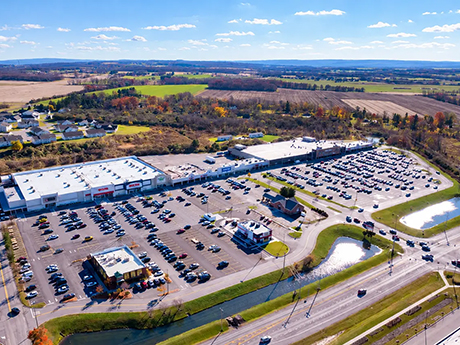
Hornell and Geneseo, N.Y. — Cleeman Realty Group brokered the sale of two grocery-anchored retail properties totaling 453,350 square feet. Hornell Plaza accounts for 253,603 square feet and has two anchors, Wegmans Food Markets and Walmart. Genesee Valley Shopping Center in Geneseo spans 199,747 square feet and is anchored by Wegmans.
The combined size puts this transaction in the category of a substantial regional retail portfolio, but square footage tells only part of the story. A center’s operating profile also depends on how its space is divided among tenants, how much is occupied, what lease obligations are in place, and what expenses fall to ownership. None of those details appears in the available information. The reported area is useful for describing the assets; it doesn’t establish their value or performance.
Hornell Plaza’s two anchors give it a different tenant structure from Genesee Valley, where Wegmans is the named anchor. In shopping centers, anchor tenants typically help generate customer visits that can benefit nearby stores. The effect depends on the property and its tenant mix, though, and the presence of an anchor by itself doesn’t prove that smaller tenants are thriving or that the center is fully leased.
Tenant mix and the role of grocery traffic
Genesee Valley adds a varied lineup alongside its supermarket: Tractor Supply, T.J. Maxx, Harbor Freight Tools, Five Below and Dollar Tree. The tenant mix broadens the center’s draw, while the shared Wegmans anchor ties the two properties together. The data doesn’t explain the buyer’s strategy or identify the buyer.
Those retailers represent different shopping needs, from household and discount purchases to apparel and farm supplies. That range can make a center relevant to customers making different kinds of trips. Grocery shopping may also create repeat visits, since food purchases tend to be routine for many households. Still, a list of tenants doesn’t show how much space each occupies, whether all are current occupants, or how their leases are structured. Those details shape how diversified a property’s rent is and how exposed it may be if an individual tenant leaves.
Here’s the thing: a familiar roster can make a retail property look straightforward, but the tenant names aren’t a substitute for operating information. The sale report identifies recognizable occupants and the two centers’ principal anchors. It doesn’t provide occupancy, rents, lease expirations, or other terms that would let readers compare the assets’ income stability. A buyer evaluating a center would generally need that property level information to understand both current cash flow and future leasing needs.
Michael Cleeman and Sam Seelenfreund of Cleeman Realty Group represented the buyer.
What the sale does and doesn’t tell the market
Wegmans’ long presence at both locations is the clearest shared characteristic in the portfolio. The recently extended leases add a concrete sign of continued commitment, although the undisclosed terms leave important questions unanswered. A long lease can support predictability for an owner, but its practical value depends on the rent, contractual responsibilities, renewal provisions, and other conditions. The article supplies no basis for drawing conclusions about those specifics.
This is more significant than it looks: the portfolio combines a long-standing grocery relationship with other established retail names, yet the information available is still too limited to explain the economics of the deal. The absence of a sale price means there’s no reported benchmark for the transaction. Without it, readers can’t calculate a price per square foot or compare the purchase directly with other sales. That’s a meaningful limit on what can be inferred from the announcement.
If you’re working in this space, the practical takeaway is to separate the property facts from the investment story. The facts include the two locations, their reported sizes, the named tenants, the broker, and Wegmans’ operating history and lease extensions. The buyer’s identity and strategy, the price, and the lease terms aren’t disclosed. Any stronger account of why the buyer pursued the portfolio would go beyond the evidence presented.
Implications and outlook
The transaction gives the two centers a new owner while preserving the reported significance of Wegmans at both sites. That may offer continuity for shoppers and neighboring tenants, but ownership changes can also bring new priorities for property management, leasing, and maintenance. No details are available about the buyer’s plans, so those possibilities should be treated as general features of a retail property transfer rather than as a description of what will happen here.
And yet, the portfolio’s basic appeal is legible: grocery anchors can support recurring visits, while a broader mix of retailers can serve customers with different needs. The strength of that arrangement depends on the terms beneath the tenant list and on each center’s actual operations. The sale report leaves those questions open. The durable relationship with Wegmans is the clearest signal in the deal; the full picture will require details that have not been reported.
For now, the transaction is best understood as a transfer of two sizeable upstate New York shopping centers with a shared grocery anchor and distinct supporting tenant mixes. A meaningful starting point. But not a complete account of either property’s financial condition or the buyer’s plans.
Discussion
Sign in to join the discussion.