MMCC arranged a $25 million loan for a retail property near I-75 in Troy, Michigan, with a 6.1% rate and seven-year term.
A $25 million loan sets the terms for Troy acquisition
The financing details are the clearest signal in this Troy retail deal: Marcus & Millichap Capital Corp. (MMCC) arranged a $25 million acquisition loan for a 62,364-square-foot property near I-75. The loan carries a 6.1 percent interest rate, a seven-year term and a 30-year amortization schedule. That long amortization paired with a shorter term shapes the borrower’s payments while leaving a refinancing or payoff decision ahead; the report doesn’t identify the borrower or explain why the lender chose these terms.
Those terms describe two different clocks. The 30-year amortization schedule spreads the principal repayment used to calculate scheduled payments over a longer period, while the seven-year term sets a much earlier point when the loan comes due. The difference matters: a borrower can make payments based on a long repayment schedule yet still face a substantial balance when the term ends. The source doesn’t state the outstanding balance that would remain, and it can’t be calculated from the information given alone.
The 6.1 percent rate adds another piece of the financing picture, but it doesn’t reveal the loan’s full structure. The report doesn’t say whether the rate is fixed or variable, whether the loan includes interest-only payments, or what fees and other conditions apply. Those details can affect the borrower’s actual costs and flexibility. Without them, the reported rate is useful context, not a complete account of the debt.
What the loan structure tells us
Acquisition loans are arranged to fund a property purchase, but the headline amount doesn’t explain how a transaction is financed from end to end. The source doesn’t provide the purchase price, the borrower’s equity contribution, or whether other financing was involved. It therefore isn’t possible to infer the property’s valuation or the borrower’s leverage from the $25 million loan alone.
Here’s the thing: a seven-year term creates a defined future decision point, but it doesn’t tell us what the borrower expects to do at that point. A borrower might plan to refinance, repay the balance from available funds, or pursue another arrangement; the article doesn’t report a plan. Market conditions, property income and lender requirements can all matter when an existing loan approaches maturity, though none of those specifics is supplied here.
This is more significant than it looks. The loan’s amortization schedule can make routine payments more manageable than a schedule that repays principal over a shorter period, while the shorter contractual term means the debt isn’t simply set to run for 30 years. The tradeoff is that the borrower must address the remaining obligation before the amortization schedule reaches its end. A long schedule and a shorter maturity, in other words, are not interchangeable measures of how long the financing lasts.
The report also leaves out whether the loan has any prepayment provisions, renewal options or other terms that could affect the borrower’s choices. That’s common in brief financing announcements, which tend to focus on the arranged amount, rate and term. Still, readers should resist treating those few disclosed items as a full measure of the loan’s cost or risk.
The property’s retail context
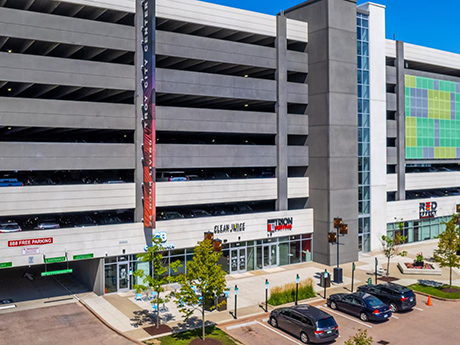
Todd Phillips of MMCC secured the financing through a national bank. The property at 700 W. Big Beaver Road is home to several national restaurants and retailers. That tenant mix and highway proximity give the asset recognizable retail credentials, though the available details don’t say who the tenants are or how the property is performing.
A mix of restaurants and retailers can matter to how a shopping property serves its area. Different businesses may draw customers for different reasons, and restaurant uses can support visits that don’t follow the same pattern as a conventional retail trip. But the source doesn’t identify the tenants, describe their lease terms, or say how many spaces they occupy. It would be premature to read a tenant list, occupancy rate or income stream into the phrase “several national restaurants and retailers.”
The location near I-75 is a relevant feature, but a highway reference alone doesn’t establish customer demand or access quality. Retail performance can depend on factors such as visibility, entrances, surrounding uses and the needs of the businesses on site. The article provides no traffic counts, site plan or sales data. Those gaps limit what can be concluded about the property’s competitive position.
Its stated size—62,364 square feet—gives readers a sense of scale, but square footage is only one part of a retail asset’s profile. The source doesn’t break down the area by tenant, explain whether the space is fully occupied, or describe the property’s configuration. And yet, the combination of a defined location, a stated size and recognizable categories of tenants does make this more concrete than a financing announcement that names only a loan amount.
What remains unknown
The article gives a concise record of who arranged the debt, the bank category, the rate, the term and the amortization schedule. It doesn’t name the borrower or provide a purchase price. Nor does it report rental income, occupancy, lease expirations, property expenses or recent operating performance. Those omissions aren’t evidence of a problem; they simply mean the loan terms can’t be tied to a demonstrated account of the property’s cash flow.
For anyone comparing this deal with another retail financing, the missing details are material. A rate in isolation doesn’t show how one loan compares with another unless the surrounding terms are also known. The same applies to loan size: without a purchase price or information about other capital, it can’t be used to judge how much of the acquisition debt covers. If you’re working in this space, treat the announced terms as a snapshot of the financing, not a verdict on the asset.
(And this is the part most people overlook.) A short announcement can make a transaction sound more fully explained than it is. The disclosed terms are specific, but the borrower’s plans, lender’s reasoning and property performance remain outside the account. A clean set of headline figures. Not the whole underwriting story.
Implications for the borrower and the market
The immediate implication is that the borrower has a seven-year loan term paired with payments calculated on a 30-year amortization schedule. At the end of the term, the borrower will need to address the loan according to its full terms, which the source doesn’t provide. That future point may be distant relative to the acquisition, but it’s already part of the financing structure.
For the retail property, the announcement indicates that a national bank provided acquisition financing arranged by MMCC. It doesn’t establish that the lender expects a particular level of performance, or that the property has been assessed against any specific benchmark. The bank’s participation is a transaction fact; its reasoning hasn’t been reported.
That said, the basic structure is useful to watch because it separates near-term payment calculations from the date when the loan comes due. Readers following the property or the broader retail market would need more information—such as tenant details and operating results—to assess how the asset is performing, and more loan terms to understand the borrower’s obligations. Until then, the clearest reading is also the narrowest: MMCC arranged $25 million in acquisition financing for a 62,364-square-foot Troy retail property, at a stated rate of 6.1 percent, with a seven-year term and a 30-year amortization schedule.
Discussion
Sign in to join the discussion.