Kimco Realty acquired Kent’s 86,909-square-foot Canyon Ridge Plaza for $19 million. The center was 94% leased, with Ross renewing for 10 years.
Kimco buys a nearly full Kent retail center
At $19 million, Kimco Realty’s purchase of Canyon Ridge Plaza comes with a useful signal: the 86,909-square-foot center was 94 percent leased when it sold. That leaves a relatively small share of the property unleased at the time of the transaction, although the figure alone doesn’t show whether the remaining space is concentrated in one suite or spread across several. Nor does it reveal whether the available space was already being marketed, in transition, or simply awaiting a new tenant. The property is in Kent, Washington, about 16 miles south of Seattle, and its occupancy suggests the buyer is taking on a center with limited immediate vacancy to address.
That distinction matters. A high leased percentage can make a center look stable at a glance, but occupancy is only one part of the operating picture. Lease expirations, tenant sales, rent levels, and the cost of preparing space for a new occupant can all affect how much work a buyer faces after a sale. The available details don’t answer those questions, so the 94 percent figure is best read as a useful starting point rather than a full account of the property’s condition.
National retailers and recent lease commitments
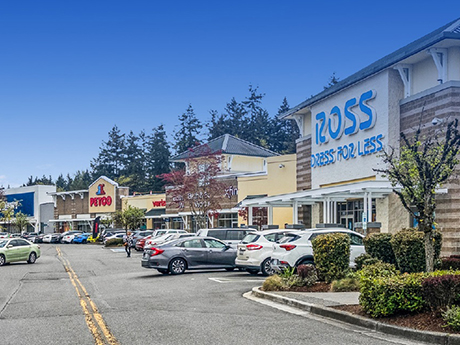
The center sits at 104th Avenue Southeast and Southeast 260th Street. A corporate-owned Target shadow-anchors the property, alongside Ross Dress for Less, Old Navy, Petco, Bath & Body Works and Verizon Wireless. That tenant mix gives the center recognizable retail draw, though the available details don’t indicate how much space each retailer occupies or what lease terms remain. The word “shadow-anchors” also matters: Target is nearby and may contribute to the shopping area’s draw, but the description doesn’t establish that it’s part of the center’s ownership or leased tenant roster.
For a multi-tenant retail property, a list of familiar names can help explain why shoppers might visit, but it doesn’t tell the whole leasing story. The tenants can serve different shopping needs, and that range may help a center remain relevant to more than one kind of customer. Still, a recognizable lineup shouldn’t be mistaken for proof that every store is performing well or that every lease is equally secure. The source provides no tenant sales, rent comparisons, or lease-expiration schedule. Those gaps limit what can be inferred from the names alone.
Lease activity adds some depth to the occupancy figure. Since January 2025, six tenants have signed new long-term leases or extended existing ones; Ross renewed for 10 years. That commitment is more telling than a snapshot of occupancy alone, even if the available account doesn’t identify the other five tenants or explain the terms of their deals. A long renewal can signal a tenant’s willingness to remain at a location, but it doesn’t disclose the rent, options, or other provisions that shape the economics for either side.
There’s a useful distinction here between a lease being signed and a center’s longer-term performance being established. A signed renewal gives the owner more clarity about one tenant’s presence. It doesn’t, by itself, prove that the property’s income will grow, that future leasing will be easy, or that the rest of the tenant roster has the same outlook. And yet, six new or extended long-term commitments since January 2025 are more substantial evidence of tenant continuity than occupancy alone. Ross’s 10-year renewal stands out as the clearest example in the details provided.
What the sale price and occupancy can—and can’t—show
The $19 million sale price gives the transaction a clear headline, but it can’t be judged in isolation. The source doesn’t provide the property’s income, operating costs, debt, capital needs, or the price per square foot used in the deal. Without that information, a reader can’t determine whether the price reflects a premium, a discount, or a particular return expectation. The price is a reported fact; the investment case behind it remains largely undisclosed.
The reported size and sale price do permit a simple arithmetic comparison, but that calculation wouldn’t establish value on its own. Retail centers can differ materially in their tenant mix, building condition, lease structure, and future expenses, even when their headline sizes appear comparable. A price-per-square-foot figure would be one reference point among several, not a complete measure of the transaction. This is more significant than it looks: the appealing simplicity of a sale price can invite confident conclusions that the available facts don’t support.
If you’re working in this space, the practical takeaway is to read the occupancy rate alongside lease commitments and the tenant roster, then keep the missing operating details in view. Here’s the thing: a nearly full center can still have leasing work ahead, while a vacant suite can have a different significance depending on its size, condition, and position in the property. None of that is specified here. The source offers a handful of useful indicators, not a full operating profile.
Implications for the center’s next chapter
Kimco is acquiring a property with a high reported leased percentage, several recognizable retailers, and evidence of recent lease commitments. Those facts point to an established retail center with continuing tenant activity. They don’t establish what the buyer plans to change, whether it intends to invest in the property, or how the center will perform under its ownership. Any claim about a redevelopment, repositioning, or future leasing strategy would go beyond the information available.
For now, the strongest signal is the combination of occupancy and lease activity. Together, they suggest that much of the center’s space was spoken for at the time of sale and that multiple tenants had chosen to make longer-term commitments. That’s a firmer basis for assessing continuity than the sale price alone, although the details still leave important questions unanswered. The other tenant renewals, the remaining lease terms, and the amount and status of the unleased space would help clarify how much stability the headline figures represent. A solid snapshot. Not the full picture.
Northmarq’s Sean Tufts, Kevin Adatto, Joe Dugoni and Jack Hallberg brokered the transaction.
Discussion
Sign in to join the discussion.