The partners have acquired 19 open-air centers totaling 3 million square feet, targeting growing U.S. markets with grocery stores and essential services.
A $790 million bet on necessity retail
The notable part of PSP Investments and Nuveen Real Estate’s new venture is its scale: the partners have committed an initial $790 million to buying open-air shopping centers across the United States. Their thesis is that grocery stores, essential services and other necessity-based tenants can support steadier visits through market cycles. That’s a defensible strategy, though the announcement offers no performance figures to show how these assets are doing so far. The commitment signals confidence in a familiar property type, but capital committed is not the same as evidence of performance.
PSP, a Montreal-based pension investor, and New York-based Nuveen have already acquired 19 properties totaling 3 million square feet. The centers are in Arizona, California, Colorado, Florida, Minnesota, Texas, Virginia and Washington. The venture is targeting metropolitan areas with population growth, rising household incomes and barriers to new development, where well-capitalized retailers are looking to expand. Those criteria point to a deliberate selection strategy: seek places where demand may grow and where competing supply could be harder to add. They don't, on their own, establish that rents, occupancy or property values will rise.
Nuveen portfolio manager Brian Wallick said essential goods and services have helped necessity retail withstand different economic cycles. He described the venture’s scale, relationships and local execution as strengths in what he called a stable, defensive segment of retail real estate. The strategy is clear; how much those advantages translate into returns remains to be seen. Here's the thing: a steady stream of shoppers can help a center stay relevant, but the property still depends on tenant health, good management and the quality of its location. The numbers here are underwhelming as a measure of results; the announcement provides portfolio size and rationale, but no operating data.
From individual centers to larger portfolios
Two named acquisitions illustrate the property type. The Shoppes of Lorton Valley is a 110,000-square-foot grocery-anchored neighborhood center in Lorton, Virginia. In Chandler, Arizona, Las Tiendas Village spans 188,000 square feet and is anchored by Sprouts Farmers Market. Both examples show the grocery-anchored format at the center of the strategy, with one property in Virginia and another in Arizona. That gives readers a concrete sense of the assets, though the announcement doesn't provide tenant mixes beyond the named anchors or describe the centers’ occupancy and leasing terms.
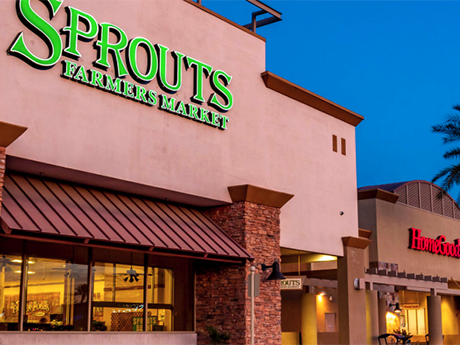
The partners have also bought two portfolios. One includes six open-air centers with roughly 801,000 square feet across the Fort Lauderdale, San Diego, Orange County, Dallas–Fort Worth, Minneapolis and Los Angeles markets. The other comprises 11 properties totaling about 1.9 million square feet in California, Colorado and Washington. Together, these portfolio transactions account for 17 of the 19 acquired properties, giving the venture a substantial base before it pursues further acquisitions.
The venture says the portfolio assets sit at high-traffic intersections or along major corridors—a location profile that fits its emphasis on convenient, routine shopping. Access and visibility matter for neighborhood centers because customers often combine errands or make short visits. But a busy road isn't a substitute for proof that the stores are drawing customers or that the tenant lineup is healthy. And this is the part most people overlook: portfolio scale can make local operating capacity more valuable, while also making execution across different markets harder to assess from a headline announcement.
Who’s behind the venture
PSP Investments manages funds transferred by the Government of Canada for the federal public service, Canadian Forces, Royal Canadian Mounted Police and Reserve Force pension plans. Established in 1999, the Quebec-based investor reported CA$320.6 billion in net assets under management at the close of its fiscal year on March 31, 2026. It is one of Canada’s largest pension investors. Its role gives the venture access to an institutional pool of capital, while the pension mandate places the property strategy within a broader portfolio managed for long-term obligations.
Nuveen Real Estate, wholly owned by the Teachers Insurance and Annuity Association of America (TIAA), is among the world’s largest real estate investment managers. The New York City-based firm has approximately $135 billion in assets under management. Pairing a large pension investor with an established real estate manager gives the partnership significant institutional backing. That pedigree can support a broad acquisition effort, but it doesn't answer the questions that will ultimately matter to owners and tenants: how the centers perform, how the partners manage them and whether the strategy holds up across varied local markets.
What the strategy will need to prove
The venture’s initial footprint gives it a platform across multiple regions and a clear focus on convenience-led retail. If you're working in this space, the key distinction is between a sound property thesis and a demonstrated operating record. Population growth, household incomes and development constraints are selection criteria; they aren't proof that every center will benefit equally. Local demand and the strength of individual tenants will still shape results.
That said, the emphasis on grocery and essential services offers a straightforward rationale for expecting repeat visits. The open-air format also puts the properties close to the daily routines the strategy is designed to serve. This is more significant than it looks: assembling 19 assets across eight states establishes reach, but the available information doesn't show whether that reach is producing stronger operating performance. For now, the venture has laid out its scale, locations and thesis. The next meaningful test will be whether it can turn those ingredients into results it can report.
Discussion
Sign in to join the discussion.