Maytoni’s rechargeable Topo lamp pairs a tiltable shade with four metal finishes for flexible use from bedside tables to outdoor settings.
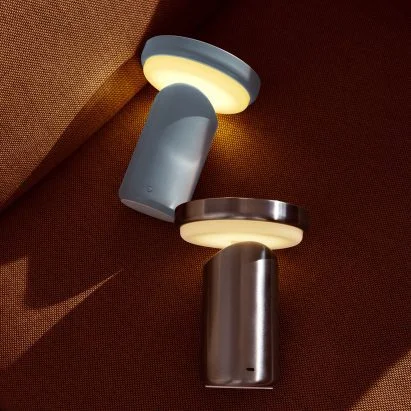
A portable lamp built around adjustment
Dezeen Showroom: The rechargeable Topo lamp gives Maytoni a compact portable option shaped around adjustable light and changing settings. Designed by Felix Pöttinger Design Studio, it pairs a cylindrical base with a disc-shaped shade that tilts to direct the lamp’s translucent diffuser. The form is simple, but the moving shade gives the user some say over where the light falls. That distinction matters in a portable lamp, which may be moved between surfaces and used in rooms with different lighting needs.
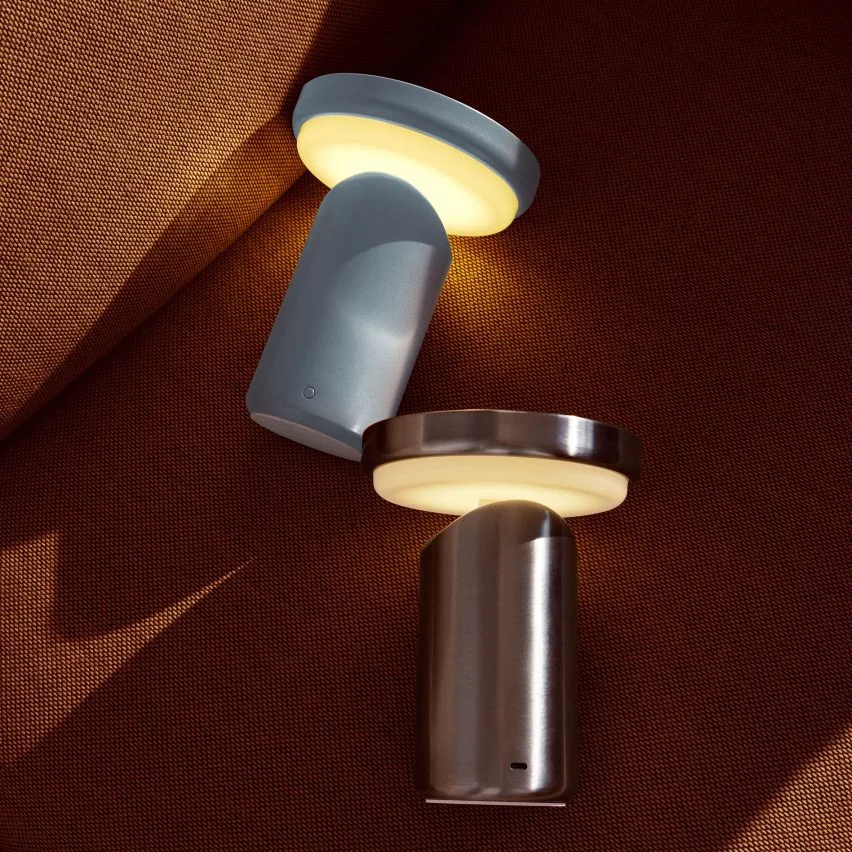
The diffuser sets up a play of light, shadow and reflection across the lamp itself, while casting softer ambient light into the surrounding space. That combination gives the design presence even when it’s switched on in a corner or on a shelf. Rather than relying on a large shade or a strong visual silhouette, Topo makes the lit surface part of the object’s character. It’s a modest effect, but one that can help a small lamp feel considered when it’s placed among books, objects or other furnishings.
Light, surface and setting
The translucent diffuser and the metal form serve different visual roles: one softens the light, while the other gives it a surface to play across. The result depends in part on the lamp’s surroundings. A nearby wall, tabletop or shelf can catch reflected light, while the adjustable shade lets the user alter its direction. The source doesn’t specify brightness levels or colour temperature, so the practical range of its lighting can’t be assessed from those details alone. What’s clear is that the design treats the lamp as both a light source and an object in the room.
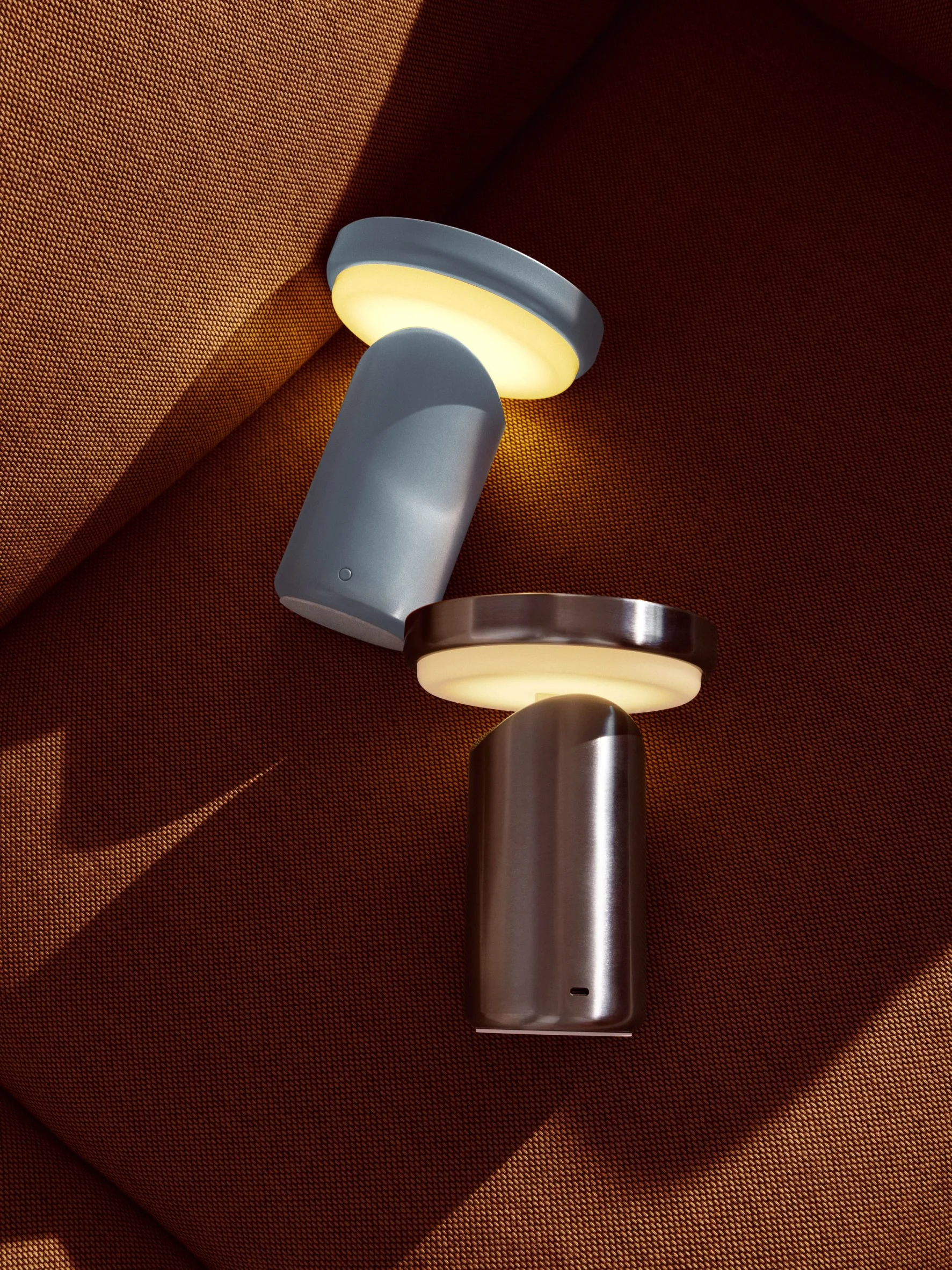
Topo uses a restrained arrangement of basic shapes. That’s a familiar approach in decorative lighting, where a clean outline can make a product easier to place across different interiors. But simplicity also puts more weight on proportion and finish: there are fewer details to distract from how the base, shade and diffuser meet. Here, the disc-shaped shade gives the otherwise vertical form a horizontal accent. A small change in angle can also shift the lamp’s appearance, as well as the direction of its light.
Designed to move between uses
Portability extends its intended use from bedside tables and shelf corners to outdoor tables. Pöttinger described the aim as creating “a dialogue between light, surface and space,” with the lamp’s presence changing according to where and how it’s used. The idea is straightforward: a rechargeable light can go where a fixed fixture can’t, and the same object can take on a different role as its setting changes. On a bedside table, it may provide a close source of light; on an outdoor table, its presence can be more about creating a softer pool of illumination.
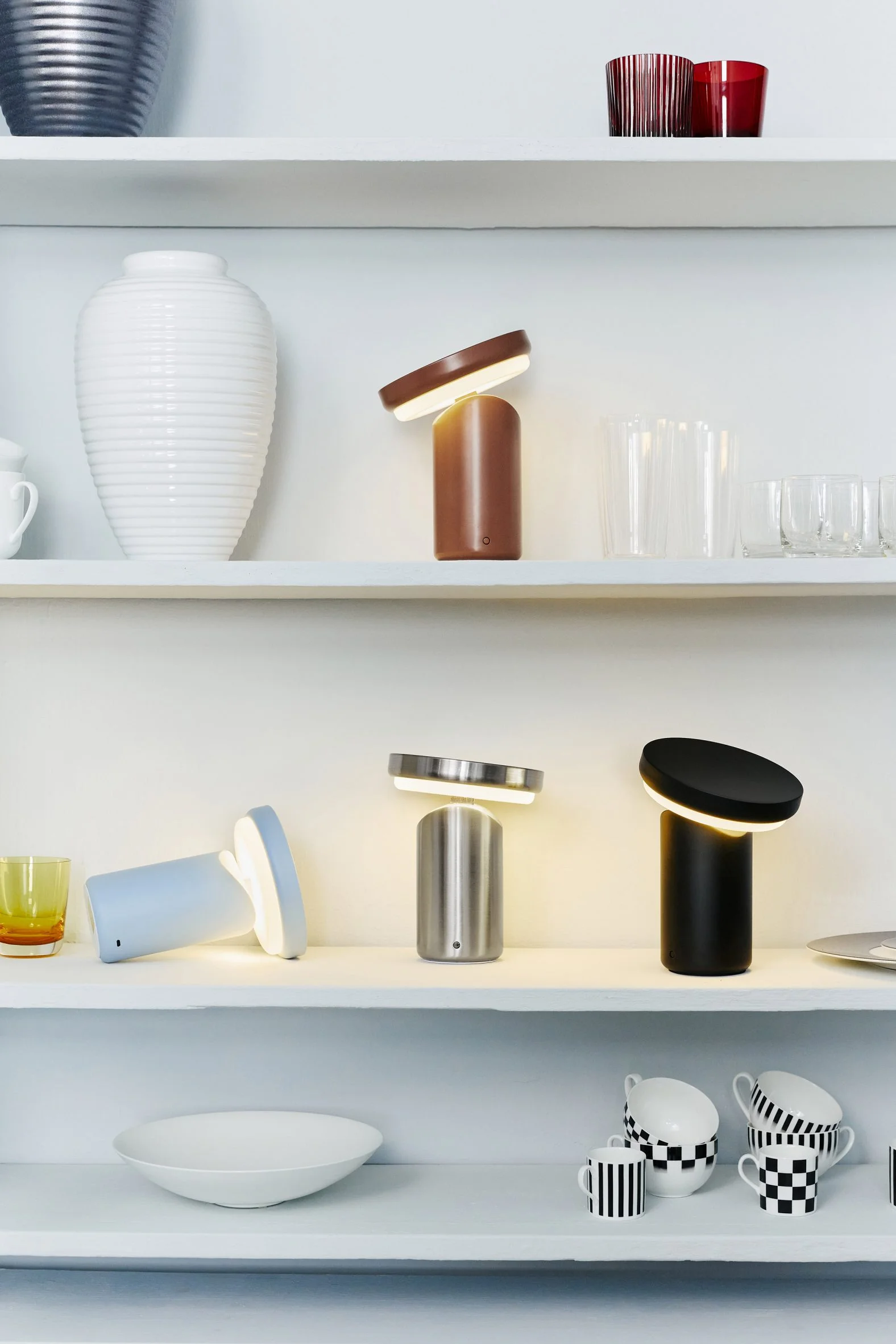
The shade’s tilt adds a useful degree of control, though it doesn’t tell us how much adjustment is available or how the lamp performs in each position. And this is the part most people overlook: portability describes where an object can go, while good portable lighting also depends on how easily it adapts once it gets there. Topo’s adjustable head and diffuse output address that second question in design terms. The remaining practical details, including battery life and charging time, aren’t provided here.
If you’re working in this space, the appeal is easy to understand: one compact object can serve several settings without needing to be installed. That flexibility has limits. A portable table lamp won’t replace every task light or room fixture, and its usefulness outdoors will depend on conditions and the specific needs of the setting. Still, the option to move it between indoor and outdoor tables gives the product a broader use case than a lamp designed for one fixed surface. A change of place, and a change in mood.
Scale, materials and finishes
Topo measures 159 x 159 x 200 millimetres and is made from metal and acrylic. Those dimensions place it within the compact table-lamp category, with a footprint that should suit smaller surfaces as well as more open arrangements. The stated materials combine a solid-looking metal exterior with an acrylic diffuser, though the available information doesn’t describe construction details or how the finishes are applied. The mid-century-inspired form gives the lamp a clear design reference without requiring elaborate ornament.
Four finishes—black, light blue, brown and polished metal—give the same form different expressions. The darker and brown options are likely to read more quietly against many interiors, while light blue and polished metal make the lamp more visually prominent; that’s a matter of placement and taste, rather than a performance difference. The numbers here are underwhelming as a selling point on their own: dimensions and material names help establish scale, but they can’t answer questions about weight, handling or durability. The design’s appeal rests more directly on its adjustable shade, diffuse light and movable format.
It’s one of two portable table lamps developed by Felix Pöttinger Design Studio for Maytoni, alongside the battery-powered Asym. That pairing suggests a shared interest in portable lighting, though the available description doesn’t provide enough detail to compare their functions or forms. Topo’s defining choices are more specific: a tilting disc shade, a translucent diffuser and a compact body intended to move between settings. This is more significant than it looks for a product in this category. The lamp’s value depends not just on its silhouette, but on whether its light and portability make sense in the places people actually use it.
Implications for everyday use
Topo presents portability as part of the design, rather than a feature added to a conventional fixed lamp. Its shape gives the product a recognizable identity, while the adjustable shade and diffuser point to a more flexible experience of light. That said, the source provides no battery specifications, charging information or lighting measurements, so buyers and specifiers have limited grounds for judging endurance or technical performance. Those omissions don’t erase the design proposition; they do mean that its practical strengths can’t be fully evaluated from appearance and dimensions alone.
For now, the clearest case for Topo is its ability to shift between surfaces and create ambient light with a visible relationship between the lamp and its surroundings. Whether that’s enough will depend on the user’s priorities: atmosphere and placement flexibility are central to the description, while detailed performance claims aren’t. The design makes a concise argument. Its day-to-day usefulness will depend on the information beyond the form.
Product details
Product: Topo
Designer: Felix Pöttinger Design Studio
Brand: Maytoni
Contact: [email protected]
Materials: metal, acrylic
Colours/finishes: black, light blue, brown, polished metal
Dimensions: 159 x 159 x 200 millimetres
Discussion
Sign in to join the discussion.