A newly renovated Mumbai apartment draws inspiration from Kerala's backwaters, featuring organic designs that enhance multi-generational living.
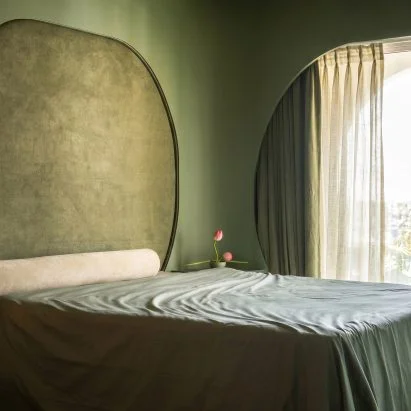
The recently renovated apartment in Mumbai, named A Borrowed Memory, is a striking homage to the tranquil beauty of Kerala’s backwaters. Designed by The Act of Quad, the space incorporates elements reminiscent of floating lily pads, creating a serene environment suitable for a multi-generational family.
Cohesive Theme and Design Elements
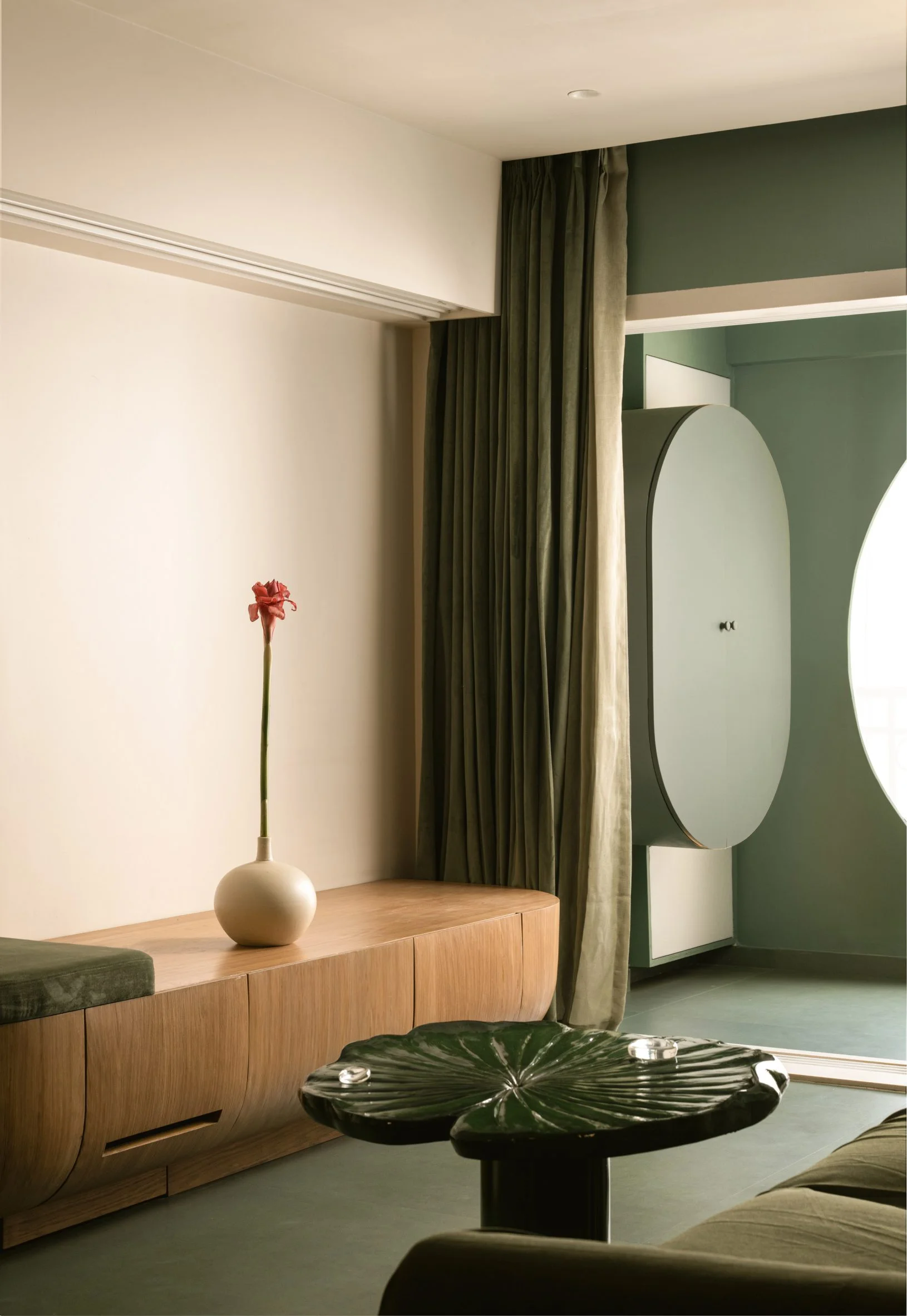
The apartment showcases continuous green flooring, intended to mirror the interconnected waterways and lush landscapes of Kerala. This unique approach blurs the lines between indoor and outdoor environments, fostering a soothing aesthetic throughout the space. Designers Priyanka Itadkar and Falguni Bhatia expressed their vision, stating that their goal was to create a setting akin to “arriving at the edge of a still body of water.”
Such a concept isn't just an artistic choice; it’s a thoughtful commentary on how architecture can cultivate emotional well-being. The design’s visual language encourages tranquility, compelling residents and visitors alike to engage with their surroundings in a contemplative way. The continuous green flooring serves as a reminder of nature's pervasive influence, subverting traditional urban interiors that tend to isolate occupants from the outside world.
Thoughtful Adaptations for Multi-Generational Living
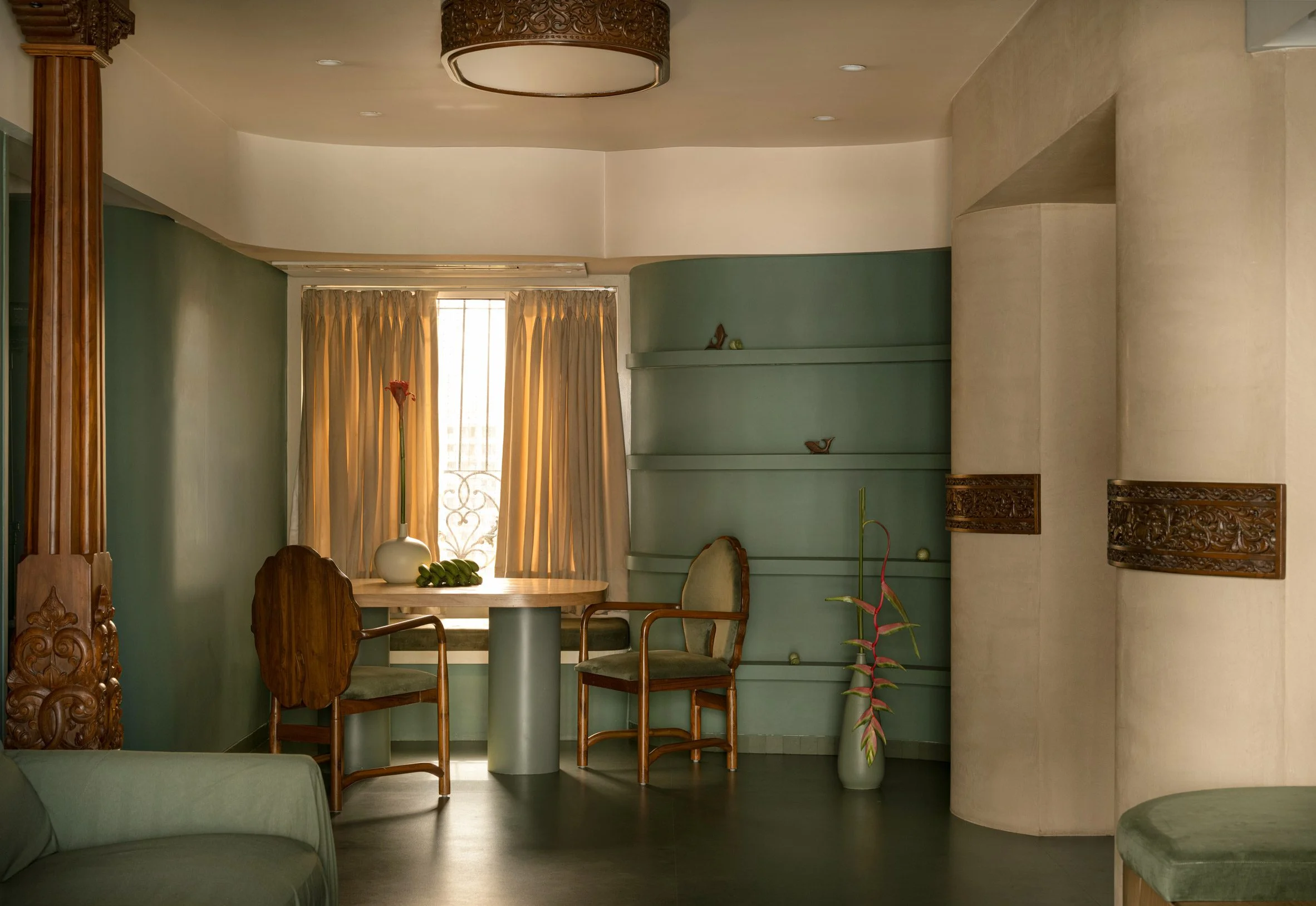
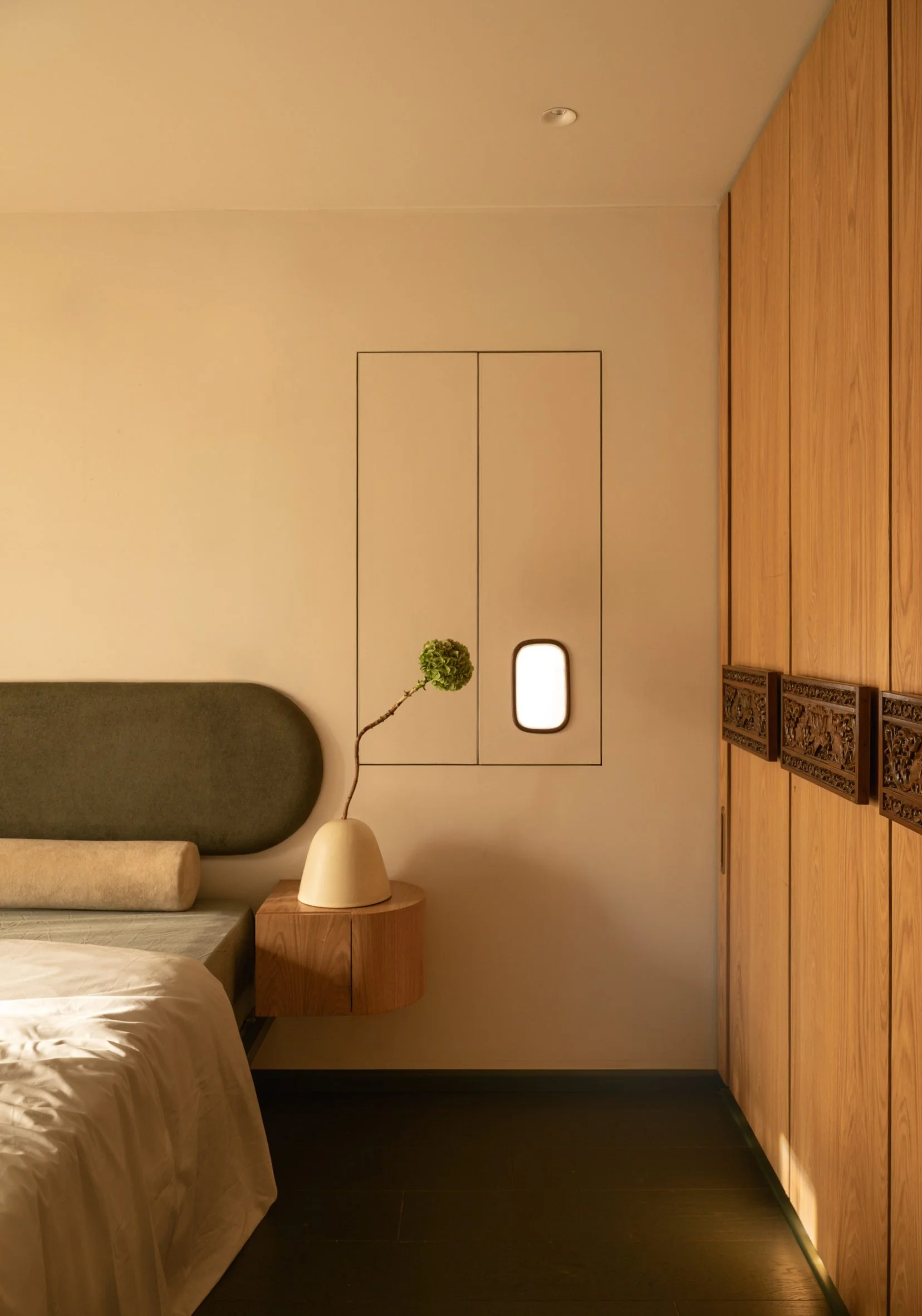
This renovation was approached with the diverse needs of its inhabitants in mind, which include a couple and their elderly grandparents. Many corners were softened with curved, lime-washed walls to create a more inviting and accessible atmosphere. The grandparents' bedroom was particularly designed for tranquility, featuring muted tones and handcrafted timber furniture that harmonize with the curved architecture.
What this means for you is that adaptations in the space enhance not just aesthetics but functionality. The dining area illustrates this adaptability as well, where a new curved wall enhances the space while enlarging an adjoining bathroom to ensure wheelchair accessibility. Such thoughtful planning allows the home to cater to both the younger and older generations effectively, facilitating independent living while still fostering connections.
Innovative Furnishings and Decorative Features
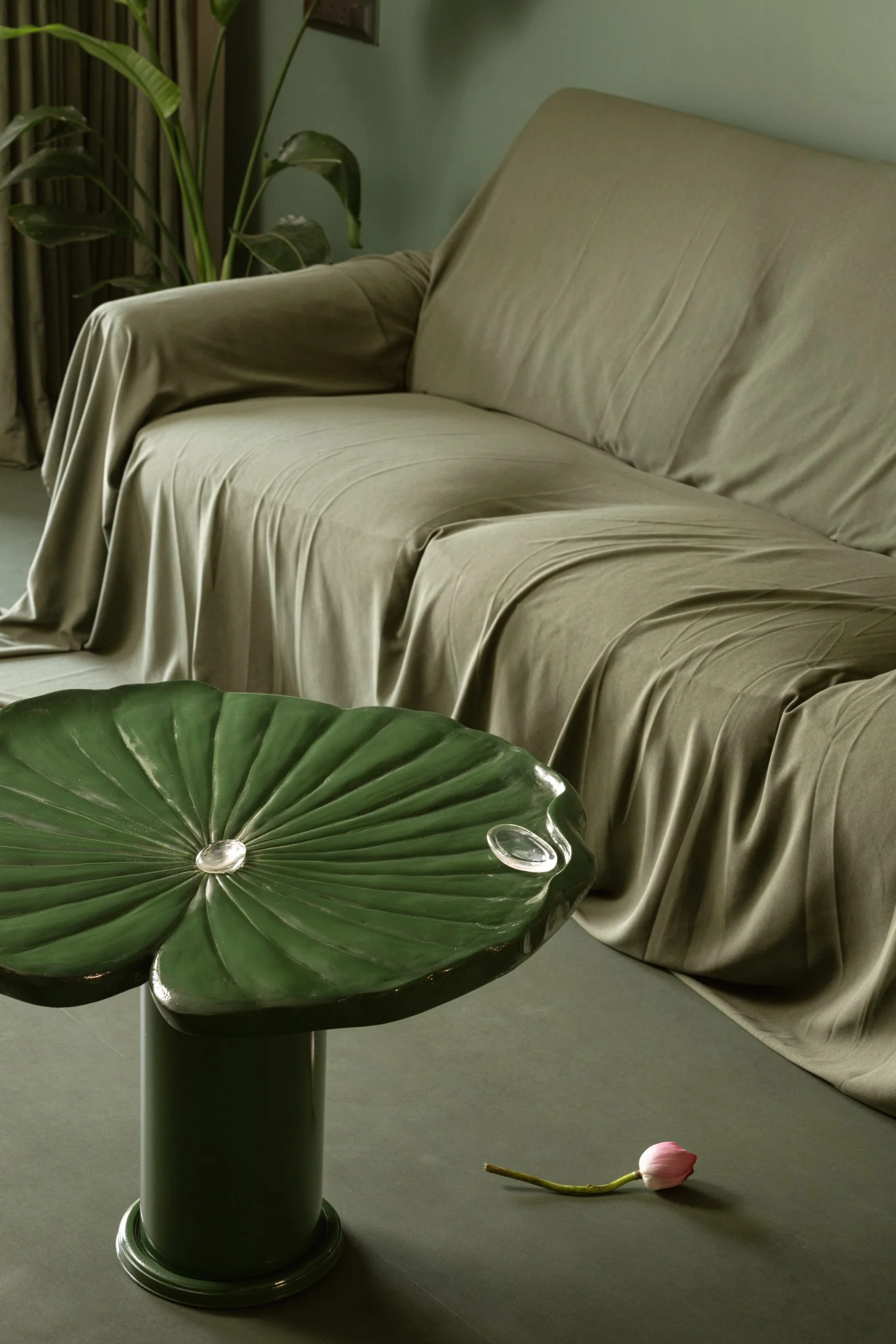
The apartment features bespoke furnishings designed with organic aesthetics in mind. Notable pieces include dining chairs with smooth contours and a coffee table inspired by lily pads, crafted from clay and embellished with resin droplets that reflect the stillness of water.
Beyond merely furnishing the space, these pieces tell a story — a narrative of the designers’ connection to Kerala, merging cultural roots with contemporary aesthetics. A sofa draped in light green fabric contrasts beautifully with an intricately hand-carved timber pillar sourced directly from Kerala, further emphasizing the connection to the region.
Such details may seem minor, but they contribute significantly to the overall character of A Borrowed Memory. In a market rife with cookie-cutter designs, this unique furnishing approach stands out, embodying a personalized touch that many urban dwellers crave.
Successful Blend of Tradition and Modern Needs
The design articulates a balance between personal touch and contemporary necessities. The living room eschews a visible television in favor of a concealed home theatre system, promoting a social atmosphere typical of traditional Indian homes.
This choice arguably reflects a broader societal shift where families are moving back to prioritizing interpersonal interaction over screen time. As founders of The Act of Quad, Itadkar and Bhatia have tackled the challenge of compact living spaces in urban India creatively. They argue that true luxury resides in crafting spaces that are emotionally resonant and tailored to the lives of those who dwell within them.
The studio, founded in 2019, continues to explore innovative residential designs in Mumbai. A Borrowed Memory stands out as a prime example of how thoughtful design can celebrate cultural roots while catering to modern family dynamics.
Implications and Future Outlook
This project highlights a growing trend in residential design: the emphasis on emotional comfort and cultural relevance. As urban settings become increasingly congested, architects and designers are under pressure to create spaces that aren’t just functional but also profoundly human. There’s a clear implication here — the demand for homes that resonate emotionally will only escalate as families navigate the challenges of high-density living.
As the conversation around wellness and accessibility gains momentum, projects like A Borrowed Memory could serve as benchmarks for future developments. They're paving the way for designs that don’t just fulfill basic needs but create environments that foster well-being and connection. So, the question is: Will this be the new norm in residential architecture? Time will tell.
Photography credits: Nayan Soni.
Discussion
Sign in to join the discussion.