The EU AI Act now requires creators of realistic AI-generated architectural renderings to label their work, imposing new responsibilities on designers.
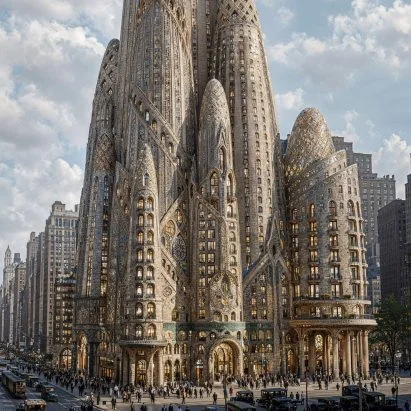
Creatives and firms producing realistic AI-generated architectural renderings in the European Union are now subject to mandatory labelling under the EU AI Act, which took effect recently. As of August 2, 2024, compliance with the act is crucial for all business entities leveraging AI technologies.
The Article 50 of the EU AI Act specifically targets creators of realistic images, video, and audio content, requiring them to clearly disclose if their works are AI-generated or manipulated. This directive aims to curb potential harm arising from misleading content.
Although many creative outputs are exempt from such requirements, Szymon Sieniewicz, a counsel at law firm Addleshaw Goddard, identifies realistic AI architectural visualisations as likely falling under the act's "deepfake" categorization. He emphasized, "If it's realistic scenery with AI generation, it needs to be labelled."
Implications of Article 50 for the Creative Industries
Passed as part of broader legislation in 2024, Article 50 introduces transparency obligations that affect business across sectors utilizing AI—not exclusively tech developers. The most significant stipulation is Article 50(4), which mandates that any image, audio, or video deemed a deepfake must be labelled correspondingly.
Sieniewicz explains that while architectural visualisations may not intuitively qualify as deepfakes, they meet the definition. An image is considered a deepfake if it resembles real entities or events deceptively, leading observers to believe it is authentic.
The definition applies even to entirely fictional depictions, such as images of unbuilt structures. This presents challenges not only for architects but also for industries like gaming, which may create realistic simulations of urban environments.
Labelling Guidelines and Enforcement
The EU AI Act doesn’t stipulate the exact method for labelling AI-generated content, yet recommendations from the European Commission suggest using an easily identifiable icon stating "AI generated" or "AI modified." Noncompliance could incur substantial penalties, reaching up to €15 million or 3% of a company’s annual turnover. However, initial enforcement of fines might be more lenient as regulators adapt.
Importantly, companies that modify product imagery using AI tools must also label these changes. For example, enhancing the attractiveness or perceived quality of a product through AI falls under this requirement, whereas basic alterations like cropping or color correction do not.
Text Disclosure Requirements
Textual content isn't exempt either. If published to inform the public on issues of general interest, any AI-generated or altered text will need to be disclosed. However, routine web copy may remain unlabelled unless closely aligned with critical subjects like sustainability or consumer rights.
Chatbots representing AI tools in customer service contexts must also disclose their nature during initial interactions. The safest approach, Sieniewicz advises, is to inform users they're engaging with an "AI-powered tool."
Creative Content and Artistic Freedom
As the act unfolds, the tension between artistic expression and commercial transparency becomes evident. A lighter disclosure policy applies to purely artistic, satirical, or fictional works, but architectural renderings aimed at promotional purposes will not benefit from these exemptions. "Artistic works might have fewer labelling demands, but for standard practices in the architecture domain, clear labelling is now essential," Sieniewicz stated.
This increased obligation for transparency is anticipated to resonate positively with architectural visualisation professionals. Many have argued that reliance on AI for generating images undermines their expertise and often results in inferior quality outputs. There's also prevalent concern around potential copyright infringements tied to AI systems trained on vast amounts of content without permission.
Consequently, creators in the architectural field face new complexities as they navigate these regulatory changes, compelling them to rethink how they present their AI-generated works. The evolving landscape is sure to impact not only compliance strategies but also creative practices moving forward.
Top image: Hotel Attraction by AI artist Thierry Lechanteur.
Discussion
Sign in to join the discussion.