The 20,309-square-foot Fullerton retail center sold for $12.7 million fully occupied, with FedEx Office among its tenants.
Fullerton Court sells for $12.7 million
Fullerton Court’s full occupancy and location beside Fullerton College are the standout details in its $12.7 million sale. A Newport Beach private partnership sold the two-story retail center to a private 1031 exchange investor based in Los Angeles. Hanley Investment Group Real Estate Advisors and Summit RE arranged the transaction. Those facts sketch the deal’s basic appeal, but they don’t explain its pricing: the reported information doesn’t include rents, lease expirations, operating costs or other terms that would show how income supported the sale price.
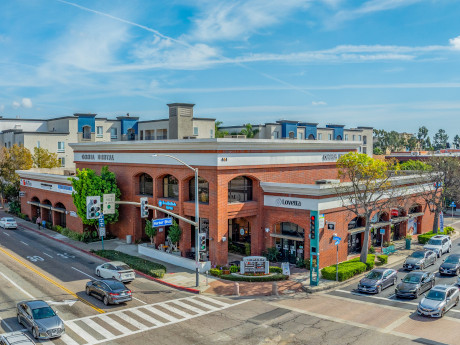
At 444 N. Harbor Blvd. in Fullerton, California, the property spans 20,309 square feet. Built in 1982, it was expanded in 2004. FedEx Office and Pixiu Mala Hongtang were among its tenants when it sold, and the center was fully occupied.
What occupancy says—and what it doesn’t
Full occupancy gives a buyer a useful starting point: every rentable space was occupied at the time of the sale. That’s a clear snapshot of leasing status, and it removes the immediate task of filling vacant units. But occupancy alone says little about the quality or durability of the income. A center can be fully leased while individual leases vary widely in rent, length, renewal options and responsibility for expenses.
That distinction matters in a multi-tenant property. The owner’s income depends not just on whether spaces have tenants, but on what each lease requires and when it expires. A buyer assessing future performance would typically examine the rent roll, lease documents, operating expenses, tenant credit and property condition. Those are standard parts of understanding a retail asset; the sale account doesn’t provide them for Fullerton Court.
So the headline figure needs restraint. The $12.7 million price is a confirmed transaction detail, but without income and expense information, it can’t by itself show whether the center sold at a high or low valuation. The numbers here are incomplete. That’s not a criticism of the deal; it’s a limit on what readers can conclude from the available facts.
Location, tenants and the retail mix
The center’s position beside Fullerton College is relevant context because nearby institutions can contribute to the activity around a retail property. Still, proximity isn’t a guarantee of sales or tenant performance. The available account doesn’t describe customer traffic, tenant sales, parking, visibility from the street or the college’s relationship with the businesses at the center. Those details would help explain how the location works in practice.
Its named tenants also suggest a mix of service and food uses: FedEx Office and Pixiu Mala Hongtang were among the businesses in place at closing. A tenant mix can matter to a buyer because different uses may draw customers for different reasons and at different times. But two named tenants don’t establish the full roster or show how much space each occupied. The caption identifies FedEx Office as the anchor; no further details about its lease or role are provided.
For readers following retail property, this is the part most people overlook: a center’s identity as “fully occupied” can make the leasing picture sound settled, even though a buyer still has to manage renewals, tenant needs and the upkeep of shared areas. A building’s age and expansion history also give useful physical context, but they don’t reveal its current condition or the scale of any future work.
Building history and operating considerations
Fullerton Court was built in 1982 and expanded in 2004. The expansion indicates that the property changed after its original construction, but the sale report doesn’t say what was added or how the work affected the center’s layout. For a buyer, a property’s history can prompt practical questions about building systems, maintenance records and how well the space suits current tenants. The account doesn’t answer those questions, so it would be unwise to infer a need for renovations—or their absence—from the dates alone.
Retail centers also depend on shared functions that aren’t visible in a basic transaction announcement, including access, signage, common areas and building services. These features can shape how easily tenants operate and customers visit. Their condition and cost can affect ownership, but there’s no reported information on them here. A concise sale notice often gives readers the who, what and where; it rarely supplies the operating detail needed to judge the property as a business.
Buyer and seller representation
Sean Cox and Kevin Fryman of Hanley represented the seller, working with Scott Hook of Summit RE. The buyer represented itself. That identifies the brokerage roles in the transaction, but it doesn’t disclose how the buyer evaluated the property or what the seller’s reasons for selling were. Neither point should be guessed from the parties’ locations or the buyer’s exchange status.
The buyer is described as a private 1031 exchange investor based in Los Angeles. In broad terms, a 1031 exchange is a method investors use to defer taxes on gains when exchanging qualifying investment property for other qualifying property, subject to applicable requirements. That general context can help explain why an investor may be seeking a replacement asset, but it doesn’t establish the buyer’s prior property, timing, financing or specific tax circumstances. Those details aren’t in the sale account.
What the sale may signal
This is more significant than it looks as a compact example of the information that drives retail property coverage: a stated price, a fully occupied center, a recognizable anchor tenant and a location beside a college. Each is relevant. None, on its own, tells the full story of value or future performance.
If you’re working in this space, the missing details are the ones to watch for in any fuller account: lease structure, rental income, expenses, tenant concentration and the condition of the property. Without them, comparisons with other centers can be misleading, since buildings with similar size and occupancy may have very different income profiles and operating needs. The sale establishes that a buyer and seller agreed on $12.7 million. The reasons that figure made sense to both parties remain undisclosed.
Discussion
Sign in to join the discussion.