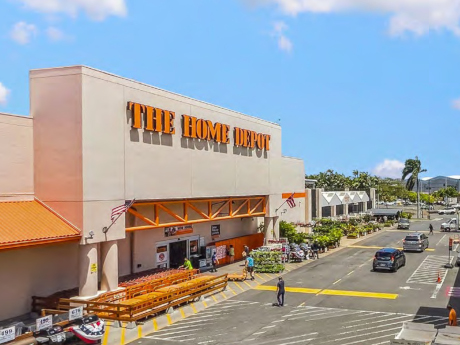
Benderson Development’s first Hawaii acquisition is a 130,000-square-foot Home Depot site in Honolulu with parking for more than 600 vehicles.
A national owner enters Hawaii
Benderson Development’s first move into Hawaii puts the Sarasota-based owner in Honolulu with a sizable, single-tenant retail asset. The privately held company has acquired the property occupied by The Home Depot at 421 Alakawa St.; the sale price and other terms weren’t disclosed. That lack of transaction detail limits what outside observers can say about pricing, financing or the buyer’s expected return, but the property’s scale makes the acquisition a substantial first step into the state.
The asset includes a 130,000-square-foot building and an adjoining, two-story parking structure with more than 600 stalls. Its established use and existing occupant give Benderson a defined property and operating setup from the outset. There’s no need to infer a redevelopment plan from the purchase alone: the available information identifies a retail property occupied by Home Depot, without describing changes to the site or the store.
For an owner with a broad mainland portfolio, entering Hawaii also means adding a market with a distinct geographic footprint. Ownership there can involve different operating considerations from managing properties across connected states, including distance from other holdings and the practical demands of overseeing a site remotely. The source doesn’t describe Benderson’s plans for local staffing or management, so those details remain open.
The role of a large single-tenant store
A single-tenant retail property differs from a multi-tenant shopping center in how its occupancy is concentrated. With one named occupant, the property’s present retail use is closely tied to that tenant’s continued presence and the space’s suitability for its operations. The arrangement can make the site easier to understand at a glance, but it also concentrates occupancy in one relationship. That distinction matters when assessing what the acquisition adds to an owner’s portfolio.
Here’s the thing: the building is only part of the operating picture. Home Depot’s use of the property sits alongside a parking structure with more than 600 stalls, a significant physical component of the site. Parking capacity can shape how customers and employees access a retail location, while a two-story structure also brings maintenance and long-term upkeep considerations. The provided details establish its size and configuration; they don’t identify its condition, costs or ownership arrangements.
That’s why the reported square footage and stall count are useful, but incomplete. They describe the scale of the asset without revealing how efficiently the building and parking work together, what improvements may be needed, or how the lease is structured. Those questions often matter to buyers and operators evaluating a property, yet the sale announcement doesn’t answer them. The missing information calls for restraint, not guesswork.
A major retailer’s occupancy can give a property a clear current purpose. It doesn’t, by itself, explain the tenant’s lease term, rent, renewal rights or future plans. Those are common points of interest in single-tenant transactions, and none is disclosed here. For readers comparing retail acquisitions, the useful distinction is between what’s confirmed—the occupant and the physical scale—and what remains private.
What Benderson brings to the purchase
Benderson’s portfolio spans more than 58 million square feet across 41 states and includes over 1,000 properties. The Honolulu acquisition extends that national footprint to Hawaii and adds a major retail location. Those portfolio figures give the transaction context: this is an established property owner expanding into a new state, rather than a small operator making its first large acquisition.
Still, portfolio size doesn’t tell us how Benderson will manage this particular property or how the purchase fits its financial strategy. A large owner may have experience with varied property types and markets, but operating experience doesn’t erase the practical demands of a distant asset. And yet, an existing building and occupant can give a buyer a more concrete starting point than a site requiring a new use or a vacant property seeking tenants.
This is more significant than it looks as a geographic marker for the company, though the undisclosed price prevents a fuller read on the deal’s scale in financial terms. The acquisition adds a Hawaii address to a portfolio already spread across 41 states. It doesn’t establish a broader expansion program, and there’s no announced pipeline of additional purchases in the state.
What the public details can—and can’t—show
In property coverage, a sale announcement can identify the buyer, location, occupant and physical characteristics while leaving the economics confidential. That’s the case here. Without a price or other terms, readers can’t compare the transaction’s implied value with other assets, evaluate the buyer’s basis or judge whether the deal reflects a premium or discount. Any such conclusion would require information that hasn’t been provided.
The available facts do support a narrower assessment. Benderson has acquired a large, occupied retail property in Honolulu, with a sizable adjoining parking structure, as its first move into Hawaii. The purchase expands the company’s geographic reach and gives it a presence in a market outside its existing 41-state footprint. The announcement doesn’t explain the buyer’s intended hold period, plans for the site or expectations for the tenant relationship.
If you’re working in this space, the next useful details would be the transaction terms and any information about the lease or property operations. Those would help clarify the economics and the risks associated with a single-tenant asset. For now, the deal’s clearest significance is strategic and geographic: Benderson has added a large Honolulu retail property to an already extensive portfolio.
Implications for the company’s Hawaii foothold
The acquisition gives Benderson a foothold in Hawaii through an operating retail location rather than an announced development project. That may offer the company a direct way to learn the market through ownership and management of a substantial asset. The purchase alone, however, doesn’t show whether Benderson intends to buy more properties, pursue other types of real estate or concentrate on this site.
And this is the part most people overlook: a first acquisition is evidence of entry, not proof of a long-term expansion strategy. A single property can add a new state to a portfolio while remaining a standalone investment. Whether this becomes the start of a larger presence will depend on decisions and market conditions not described in the announcement.
For now, the useful takeaway is a measured one. Benderson has added a 130,000-square-foot Home Depot property and a two-story parking structure with more than 600 stalls to its holdings, extending its reach to Honolulu. The financial terms remain undisclosed, and the company’s next steps in Hawaii aren’t stated. A sizable asset. An unanswered question about what comes next.
Discussion
Sign in to join the discussion.