Forbo’s Flotex, vinyl, Marmoleum and Coral systems let designers carry graphics, branding and wayfinding across commercial floors.
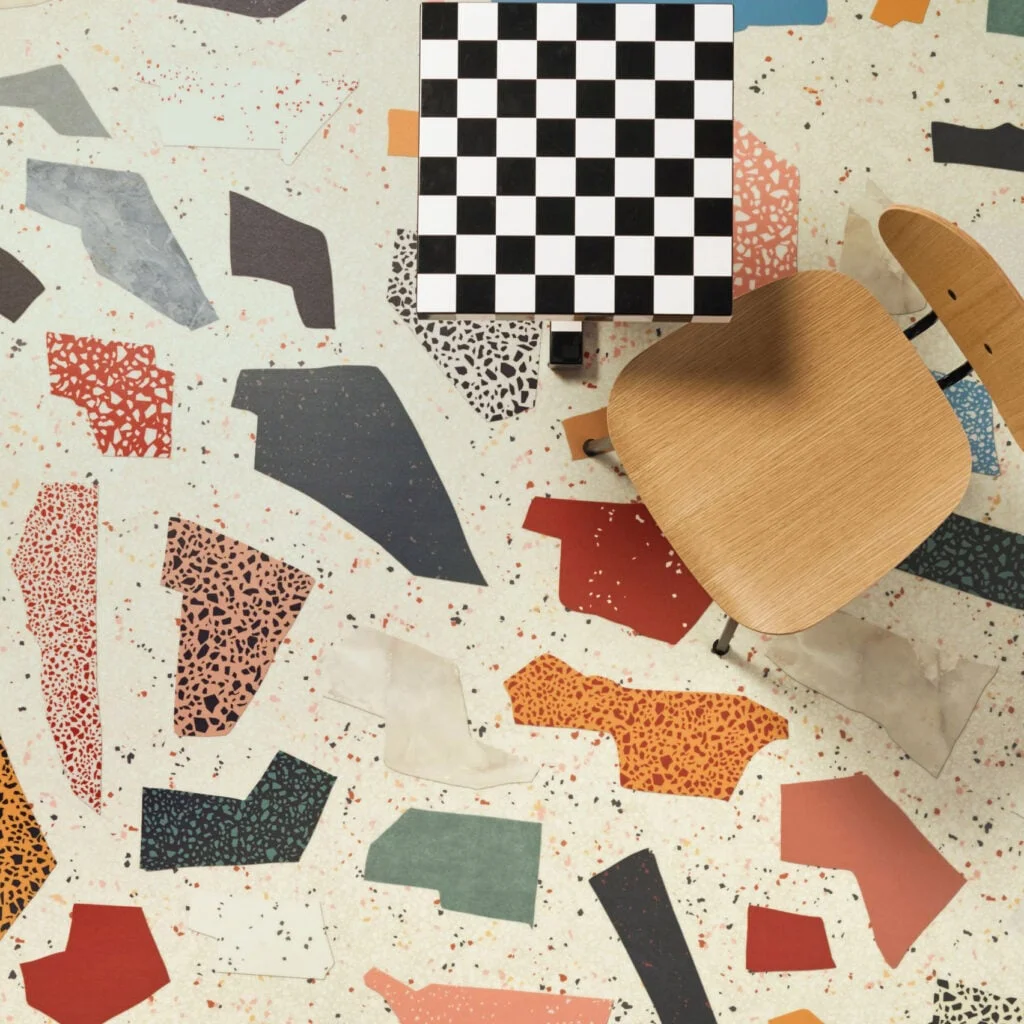
Custom flooring is taking on a broader role in commercial interiors: it can help visitors navigate a building, distinguish zones and carry an identity across connected spaces. Forbo Flooring Systems offers graphic customisation across Flotex, vinyl, Marmoleum and Coral Entrance Flooring, with techniques suited to different materials and design needs.
For designers working on hospitality, retail, workplaces, museums, education or healthcare, the floor can carry graphics, logos and messages while helping organise movement through the interior. Forbo describes the aim as making flooring an “integral part of the identity and story of a space”.
Different materials, different methods
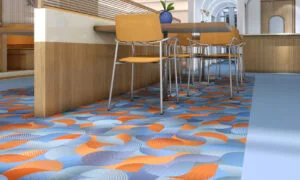
The customisation process depends on the collection. Flotex’s densely flocked surface can reproduce detailed patterns and imagery at high resolution. Digital printing on vinyl supports bespoke graphics and images, while Marmoleum designs can be assembled from precisely cut pieces.
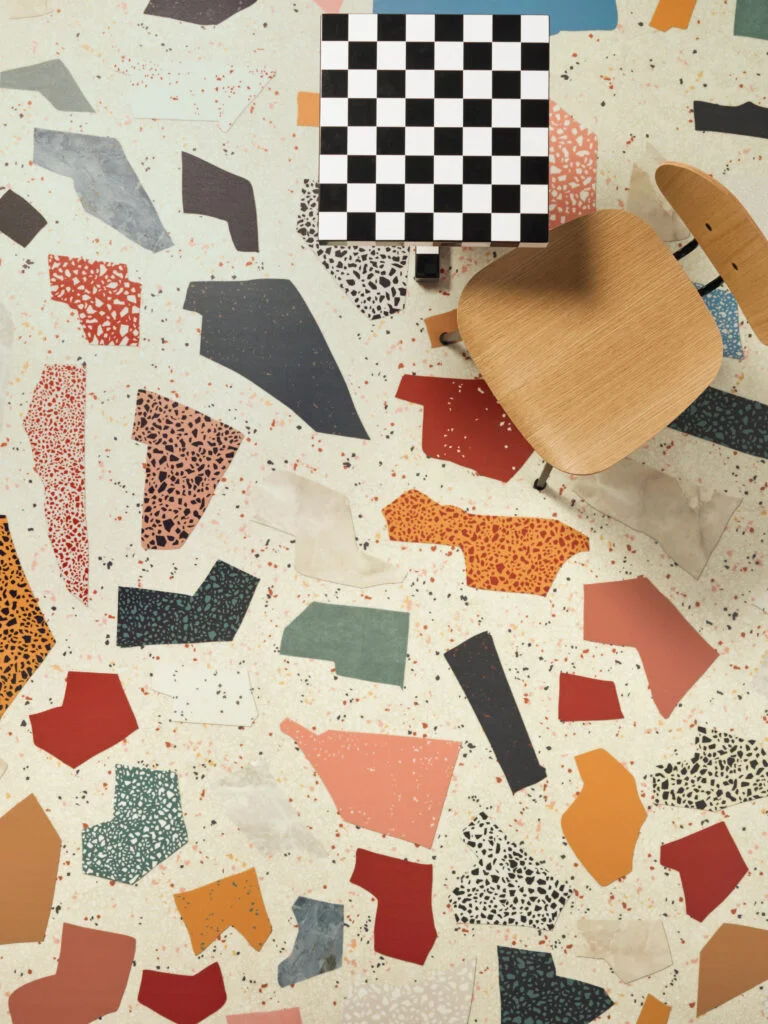
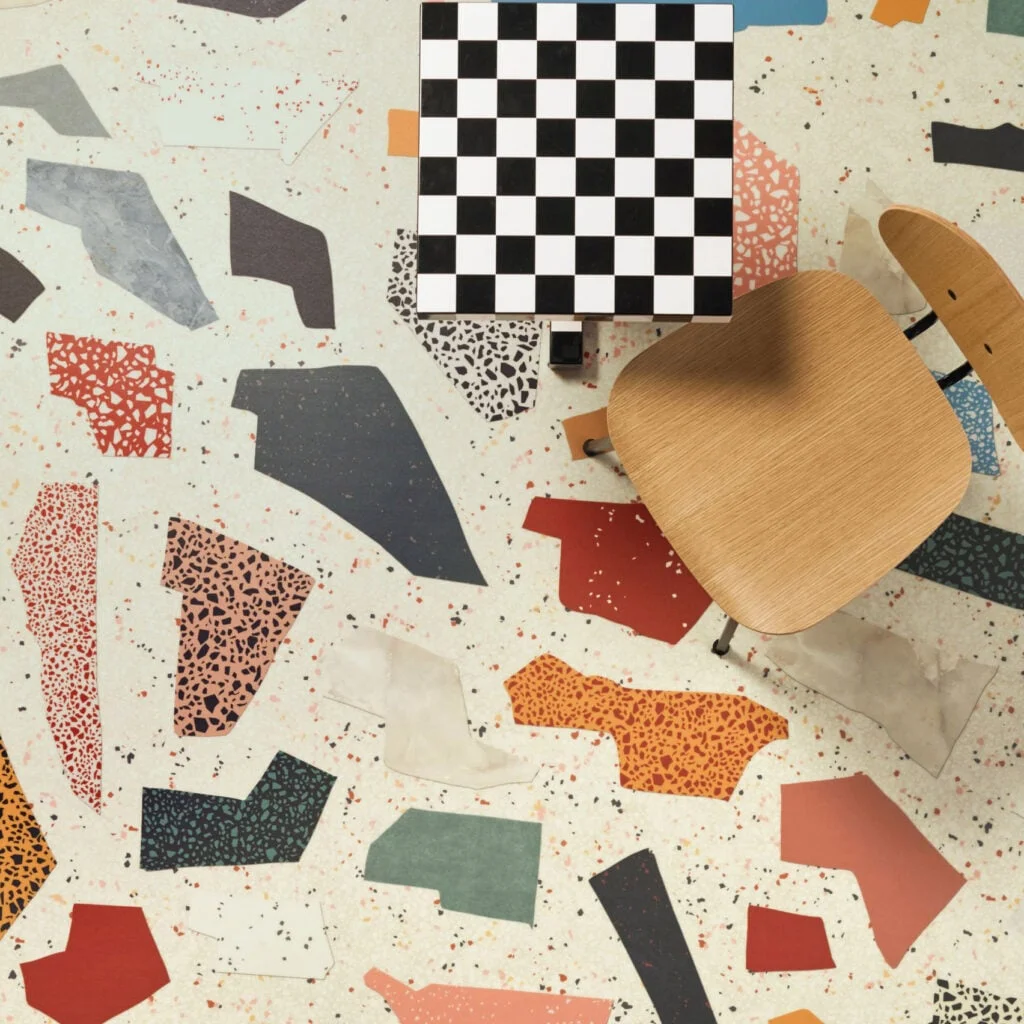
For Marmoleum, Forbo uses Aquajet technology, which cuts the material with high-pressure water. Designers can combine the cut pieces into compositions ranging from geometric motifs and decorative elements to lettering, logos and intricate artwork. The company says designers can develop their own concepts using colours from the Marmoleum palette.
Across the collections, a starting point might be an existing Forbo design with adjusted colours, or a new concept based on a graphic, photograph, illustration, pattern or brand mark. The choice of material and process determines how that concept is translated into the floor.
Design that helps organise space
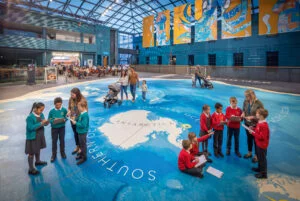
Custom surfaces can mark destinations and transitions as well as express a visual identity. In a museum, different floor designs can separate exhibitions; in healthcare or education settings, graphics can support orientation. In retail and workplace interiors, colour and pattern can reinforce a brand and clarify zones.
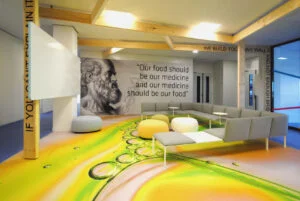
Forbo also offers Coral Entrance Flooring, which can extend a building’s visual identity to the entry while helping keep dirt and moisture from coming inside. Its custom techniques give designers another way to connect the entrance with the spaces beyond it.
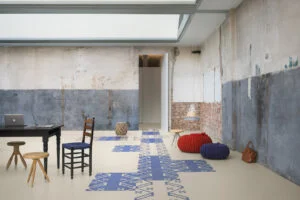
Forbo’s collections can also work together within a single project. A customised entrance may lead into an area with a distinctive floor design, while changes in colour, pattern or graphics signal different destinations. That approach lets each area use a product suited to its functional requirements while maintaining a connected visual language.
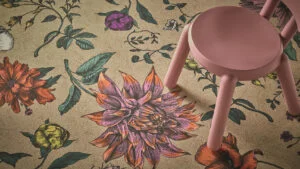
“The result is a floor that does more than provide a surface,” the company said. It can contribute to an interior’s character, communicate identity and support zoning and wayfinding. The practical opportunity is to treat flooring as part of the project’s visual and spatial plan from the outset.
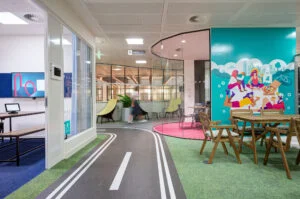
Forbo Flooring says its products have also been installed at London’s Maritime Museum. Its custom flooring range shows how a floor can combine material performance with visual cues that help people read and move through a space.
More information about Forbo’s custom flooring is available on its website.
Photography by Forbo Flooring Systems.
The post Forbo Flooring spotlights creative possibilities of custom flooring appeared first on Dezeen.
Discussion
Sign in to join the discussion.