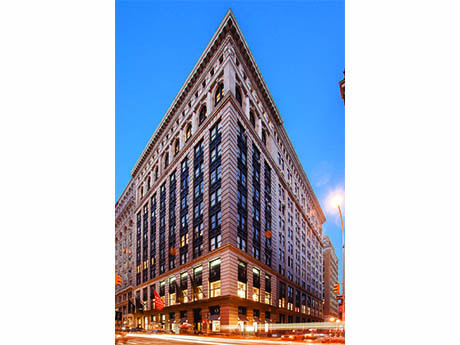
Walker & Dunlop arranged a $216 million refinancing for 568 Broadway, a 390,745-square-foot SoHo office and retail building with fully leased retail.
SoHo property refinanced with $216 million bridge loan
The headline figure is substantial, but the tenant mix helps explain why a lender might look at 568 Broadway as more than an office building: it combines a large office footprint with fully leased street level retail. Walker & Dunlop arranged a $216 million bridge loan through ACORE Capital to refinance the 390,745-square-foot building in Manhattan’s SoHo neighborhood. The reported details establish the loan amount, borrower, lender and property size, but they don’t disclose the interest rate, maturity, repayment structure or other terms. That leaves a meaningful gap between the headline and the economics of the financing.
A bridge loan is generally a shorter-term form of financing intended to cover a period when an owner’s needs or a property’s circumstances don’t fit a conventional long-term mortgage. In commercial real estate, that can include refinancing existing debt while an owner holds or manages the asset, though the source doesn’t say why this borrower chose bridge financing. The label alone doesn’t show whether the loan is meant to support a business plan, address timing, or serve another purpose. Without the loan documents or a fuller statement from the parties, those explanations would be speculation.
Retail provides a visible part of the income story
The 12-story property includes 70,870 square feet of retail, fully leased when the loan closed. Its retail tenants include Hugo Boss, Athletic Propulsion Labs, GU and Equinox. That mix gives the building a recognizable street presence and places several consumer-facing businesses alongside its office use. Still, a list of tenants isn’t a substitute for details on lease length, rent, renewal options or tenant obligations, all of which can affect how lenders assess future income.
The retail area represents a substantial component of the building, but the reported figures don’t identify how much of the remaining space is occupied or how the floors are divided between uses. That distinction matters. A fully leased retail component may give a lender a defined source of rent, while the office portion can present a different set of questions about occupancy, lease expirations and tenant demand. The available account doesn’t answer those questions, so it can’t support a complete assessment of the building’s cash flow.
Street level retail also has a different operating profile from office space. Its value to a mixed-use property can depend on visibility, access and the ability of businesses to draw customers, while office tenants typically occupy space under leases structured around workplace needs. Those broad differences help explain why a mixed-use building may attract attention from lenders looking at multiple sources of rent. They don’t establish that every tenant is equally important to the property’s finances, or that the leases carry the same level of security.
Office tenants add another layer of uncertainty
Office tenants include Zocdoc, The Farmer’s Dog and Milk Makeup. Their names provide a snapshot of some of the businesses in the building, but they don’t reveal the share of office space each occupies or whether any one tenant anchors a large portion of the rent roll. The account also doesn’t state the building’s office occupancy. That omission is material: an office tenant roster can look strong while leaving unanswered how much space is leased, how long those commitments run, and when major leases may expire.
For a lender, those details can help distinguish current income from income that may need to be replaced. Similar commercial property financings typically involve close attention to lease terms, tenant credit and the timing of expirations, because these factors shape the predictability of rental revenue. The source provides none of that information for 568 Broadway. Readers should therefore treat the named tenants as evidence of the building’s use and mix, not as proof of a particular level of financial performance.
Here’s the thing: the retail leasing detail is specific, while the office information is not. That imbalance makes it harder to judge the whole property from the published facts. A lender may have reviewed information that isn’t included here, but the public account doesn’t provide enough to tell readers what supported the loan amount or how the office component figured into the decision.
Borrower and arranging team
A joint venture of Aurora Capital, Allied Partners and A&H Acquisitions borrowed the funds. The financing was arranged by Walker & Dunlop, whose team comprised Aaron Appel, Dustin Stolly, Jonathan Schwartz, Keith Kurland, Adam Schwartz, Sean Reimer, Jordan Casella and Stanley Cayre. The reported roles are clear: the joint venture is the borrower, ACORE Capital provided the loan, and Walker & Dunlop arranged it.
The number of professionals named on the arranging team reflects the participants identified in the transaction announcement, but it doesn’t by itself tell readers how negotiations were structured or which party handled each part of the process. Nor does the account provide a statement from the borrower or lender explaining their rationale. That kind of explanation can be useful in understanding whether a financing reflects a property’s leasing, a borrower’s plans, or broader lending conditions; here, the available facts stop short of that.
What the refinancing does and doesn’t show
This is more significant than it looks in one respect: a $216 million refinancing puts a large financing figure against a property with both retail and office uses, yet the public details show only part of the underwriting picture. The fully leased retail space is a concrete fact. The building’s office occupancy and loan terms are not. Those missing details make it difficult to compare this financing with other properties or to draw conclusions about the lender’s view of the SoHo office market.
For owners and brokers following similar transactions, the practical lesson is to look past the loan amount and ask what information accompanies it. If you’re working in this space, the questions that matter include how much of the property is leased, when leases come due, and whether the disclosed tenants represent the full roster or a selection. (And this is the part most people overlook.) A recognizable tenant list can attract attention, but it won’t settle questions about duration, rent or exposure to vacancies.
And yet, the transaction does offer a limited signal: a lender provided bridge financing to a property whose reported tenant base spans office users and retail brands. That fact can be reported plainly. It can’t, on its own, establish the lender’s expectations for the building’s future, the quality of its income, or the direction of financing conditions in SoHo. The terms and occupancy details would be needed to make those judgments with confidence.
For now, the clearest account is a measured one. 568 Broadway has 390,745 square feet, including 70,870 square feet of retail that was fully leased when the loan closed; a joint venture of Aurora Capital, Allied Partners and A&H Acquisitions borrowed $216 million from ACORE Capital, with Walker & Dunlop arranging the financing. The named office tenants add context, but the missing office occupancy and loan terms remain central gaps. A substantial headline. An incomplete explanation.
Discussion
Sign in to join the discussion.