The Lithium Crystal Sauna in Skellefteå transforms a polluted industrial site into a vibrant social space, blending sustainability with innovative design.
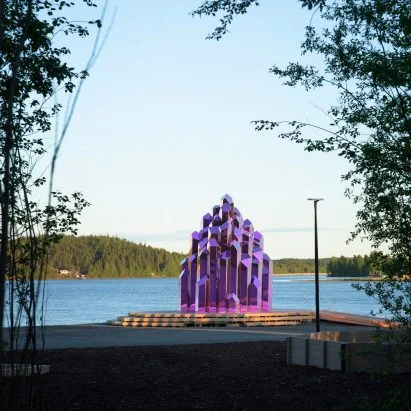
In Skellefteå, Sweden, a striking pink crystal-shaped sauna is breathing new life into a former industrial site. Designed by the renowned Stockholm-based duo Bigert & Bergström, the Lithium Crystal Sauna stands as a testament to urban renewal and environmental consciousness.
The Transformation of an Industrial Site
This sauna is the inaugural permanent structure within the WasteLand Climate Action Park, a project aimed at revitalizing Sweden's Västerbotten region, which was long marred by pollution from pulp production. Following an extensive 17-year cleanup, the site is now transforming into an inviting public space.
What was once a heavily polluted area is set to become a vibrant community hub. The WasteLand Climate Action Park not only looks to restore the environment but also to enhance community well-being by providing a location for social interaction and recreational activities. This movement toward reclamation exemplifies a broader trend in urban development, where once-neglected spaces are reimagined into public parks and cultural landmarks.
A Harmonious Blend of Functionality and Art
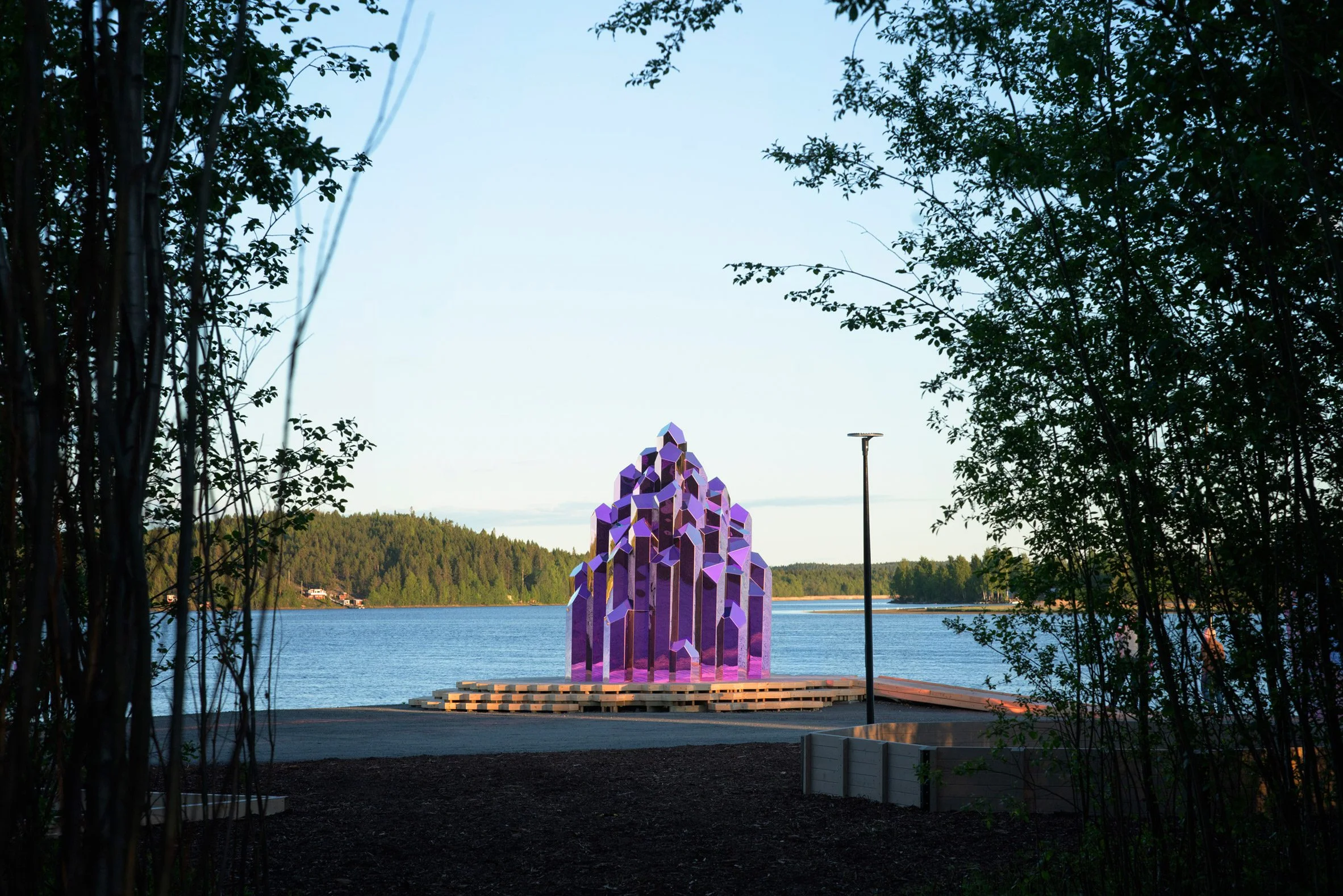
"Our objective was to embrace the site's past while creating something functional and beautiful," said the artists. The Lithium Crystal Sauna is not merely a building; it serves as a sculpture that invites contemplation and social interaction. By integrating art with utility, Bigert & Bergström have crafted a structure that sparks curiosity while serving as a gathering point.
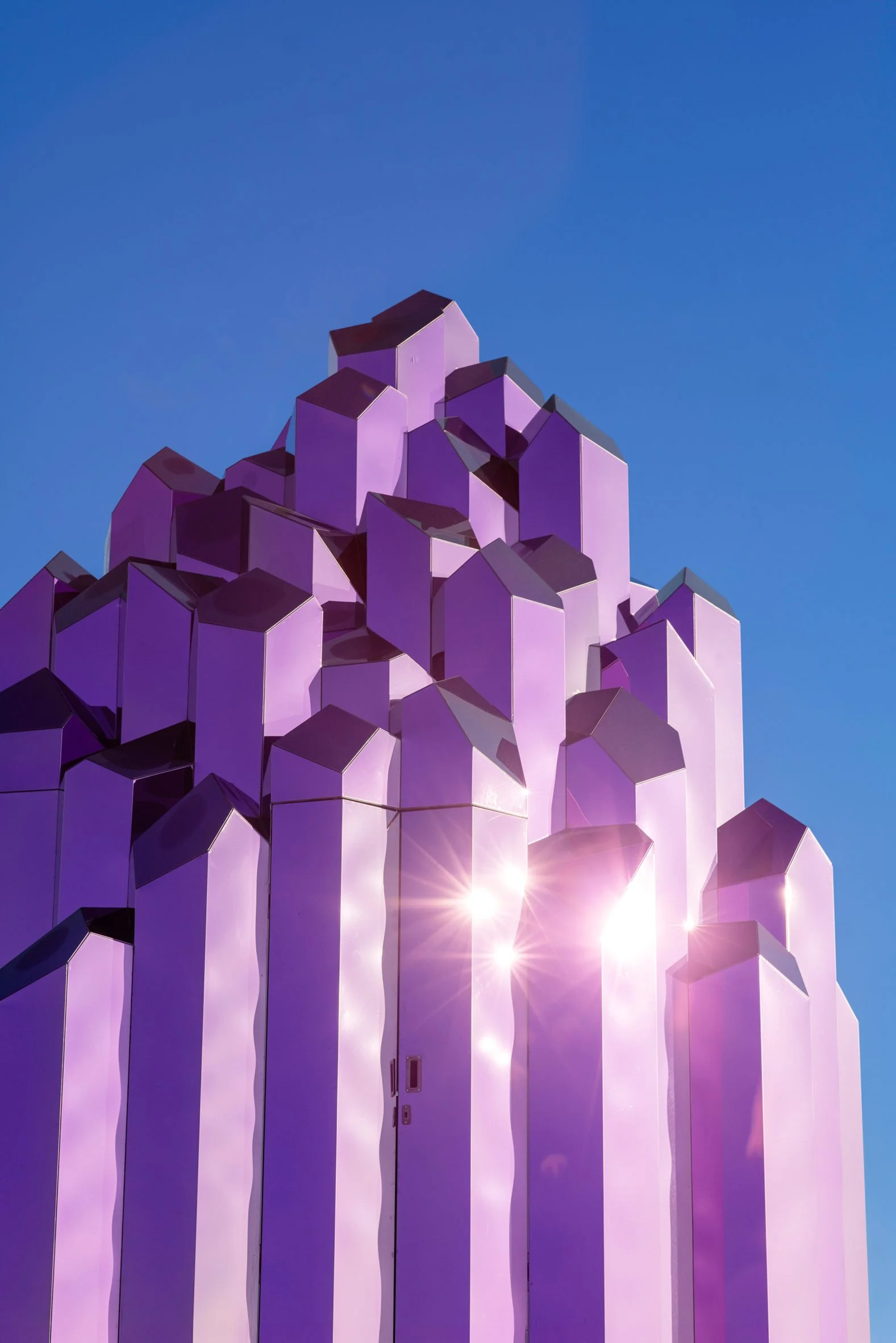
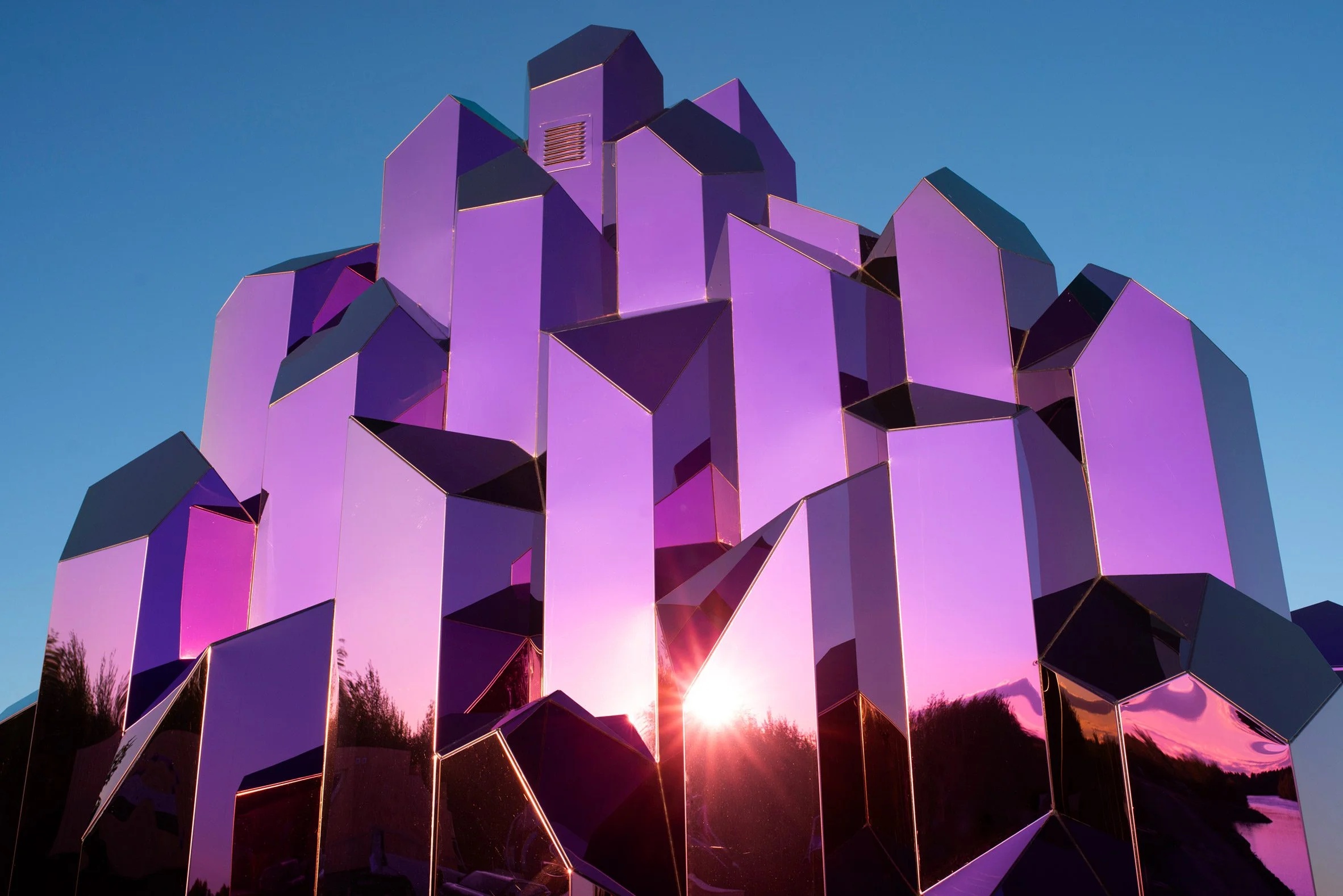
The design stands out due to its facade crafted from pink titanium-coated mirrored stainless steel. This material choice isn’t just for aesthetics; it reflects the ethos behind the project — an insistence on marrying beauty with a commitment to environmental responsibility. Asymmetry is a central theme here; composed of about 280 prisms, the sauna evokes the complexities of both the natural and urban environment it occupies.
Lithium: A Symbol of Paradox
Bigert & Bergström articulated their fascination with lithium, stating, "It's emblematic of the green transition, yet its extraction can be environmentally detrimental. This paradox is particularly relevant in Skellefteå." The choice of lithium as a thematic anchor speaks volumes about the modern environmental movement, where the search for sustainable solutions often reveals uncomfortable truths about the materials that drive progress.
Design Inspired by Nature
The structure's design incorporates a subtle four-degree lean, conveying an illusion that it has organically emerged from the landscape. Positioned on a hexagonal deck made from local heartwood pine, the sauna's base evokes a natural connection to its surroundings. This emphasis on local materials not only honors the geography but bolsters the ecological narrative the sauna seeks to convey.
Employing advanced technology, the unique pink hue results from the evaporation of titanium and its subsequent deposition on stainless steel in a vacuum. This process not only produces an eye-catching aesthetic but also speaks to the growing trend of utilizing advanced manufacturing techniques to reduce waste and enhance efficiency. The mirrored surfaces create a dynamic visual dialogue with the environment, inviting passersby to reflect on the contrast between nature and industrial progress (and this is the part most people overlook).
Interior: A Nod to Comfort and Tradition
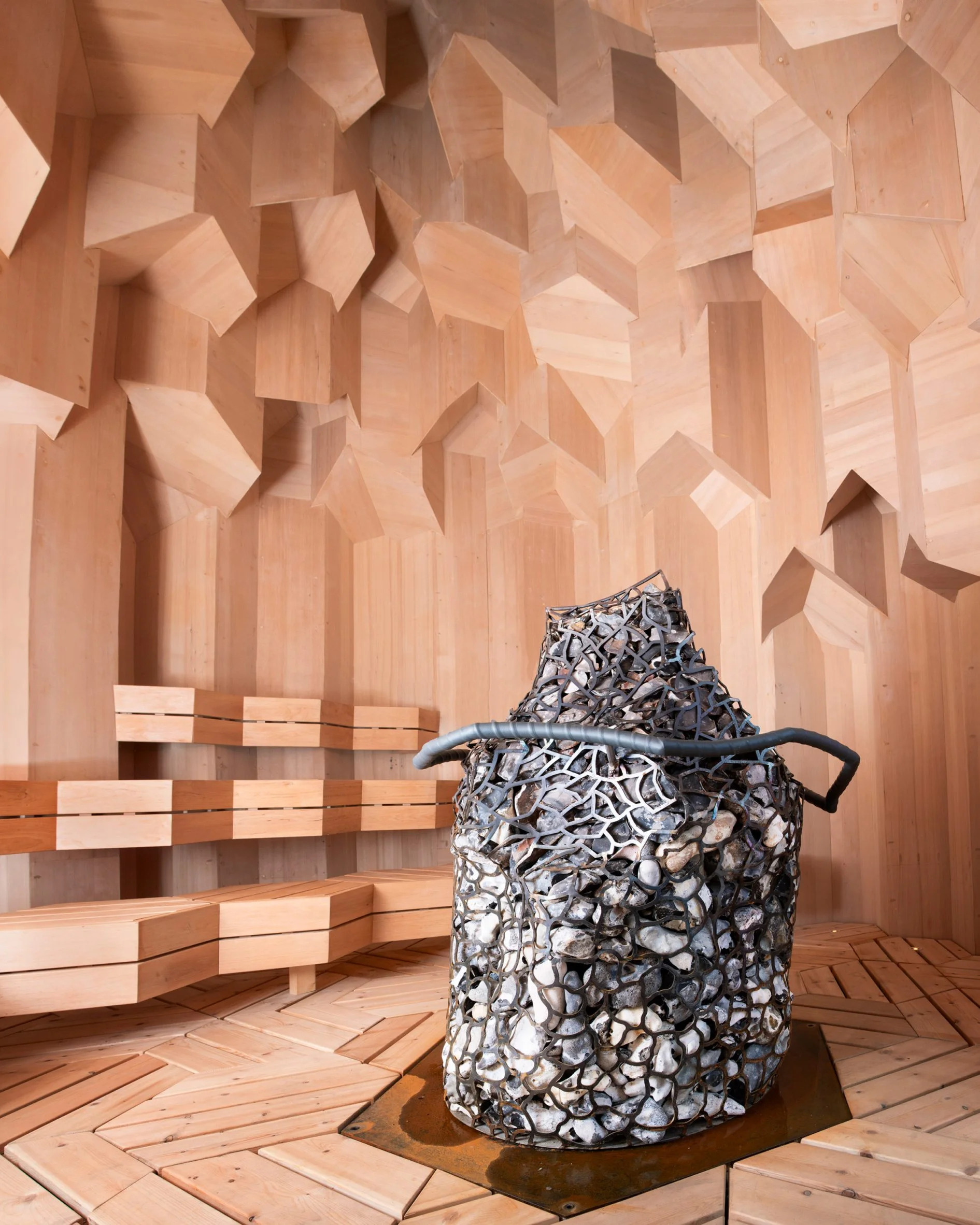
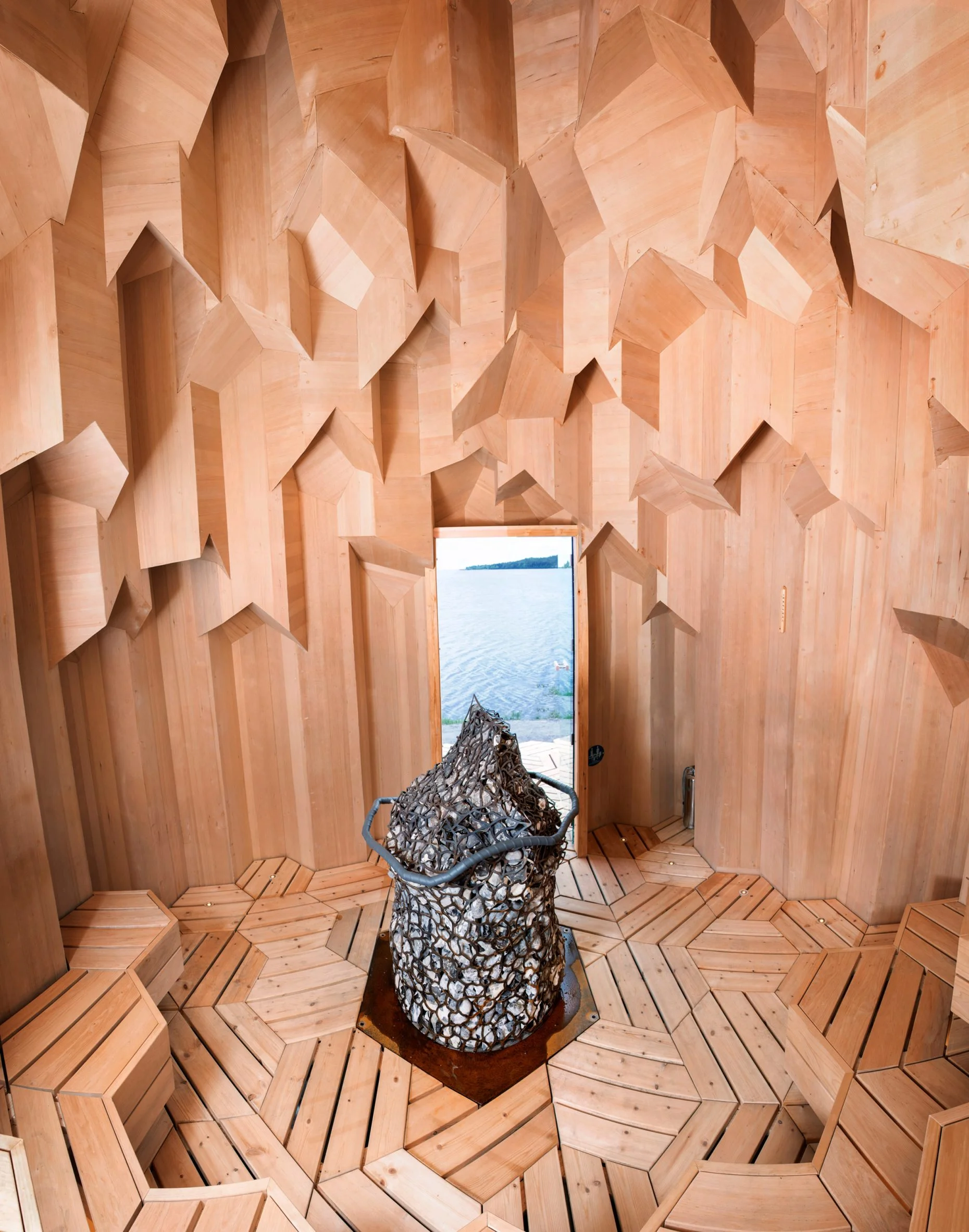
Inside, the sauna features a bespoke, battery-operated heater filled with 260 kilograms of olivine stones, encased in flint from Normandy. Bigert & Bergström emphasized that this heater utilizes stored green energy, integrating modern technology with humanity's elemental connection to fire. This duality of technology and tradition reflects a growing recognition of the importance of maintaining cultural practices while adapting to contemporary needs.
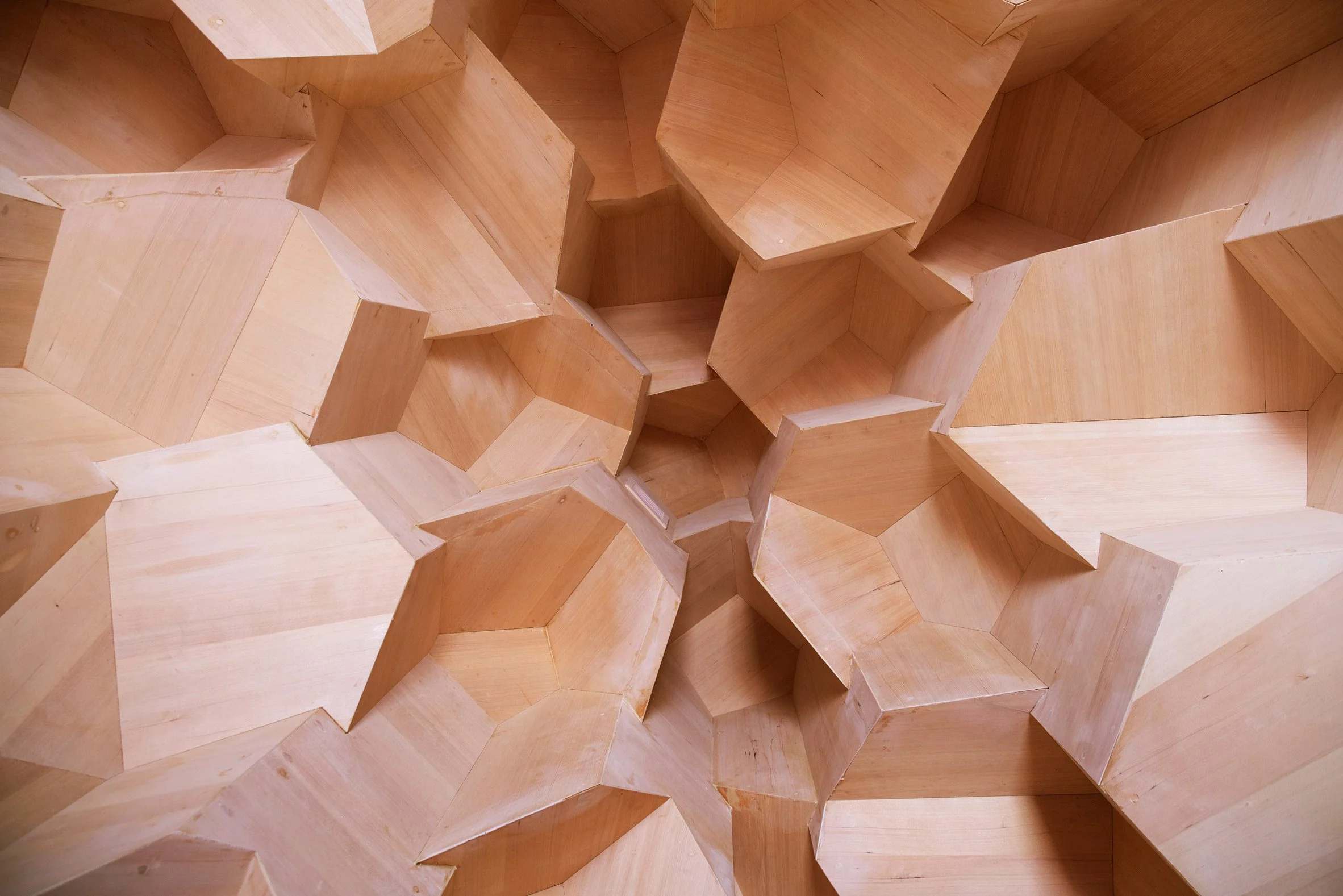
Contrasting with the reflective exterior, the sauna's interior is crafted from heat-resistant wooden veneers. Bigert & Bergström likened entering the sauna to stepping into a cave, symbolizing humanity's early quest for warmth and comfort. This deliberate design choice establishes a restorative atmosphere, providing a sensory retreat from the modern world. The warmth of wood can evoke memories and emotions tied to communal gathering and solace.
Community Engagement and Future Implications
Equipped to accommodate up to 12 individuals, the sauna features handmade alder benches arranged around the heater and a large glazed doorway that opens to views of the Skellefte River. The use of local heartwood pine for the flooring ensures durability without chemical treatments. This focus on local sourcing not only supports the community economically but also strengthens the connection between the sauna and its environment.
Bigert & Bergström envision the lithium sauna as a communal space, a detached artwork where people can converge and discuss the evolving landscape around them. "Crystal Sauna is meant to foster a sense of belonging," they remarked, emphasizing its role as a gathering spot rather than just a visual piece. This vision aligns with contemporary architectural thinking that prioritizes spaces designed for community interaction and participation.
The Broader Significance of the Lithium Crystal Sauna
This sauna stands as a model for future architectural endeavors, merging art, technology, and environmental awareness. The development of such projects highlights a growing trend towards reimagining urban spaces and enhancing community engagement. As cities face challenges related to climate change and urban sprawl, projects like this can serve as templates for sustainable development that integrates artistic expression into the built environment.
If you're working in this space, it's important to consider how structures can foster social unity while addressing environmental concerns. The cumulative impact of these communal spaces is significant, cultivating a culture of environmental stewardship alongside human connection.
Photography by Pär Olofsson.
The article originally appeared on Dezeen.
Discussion
Sign in to join the discussion.