Manual’s first permanent shop on Allen Street pairs camera retail and film processing with space for photographers to gather.
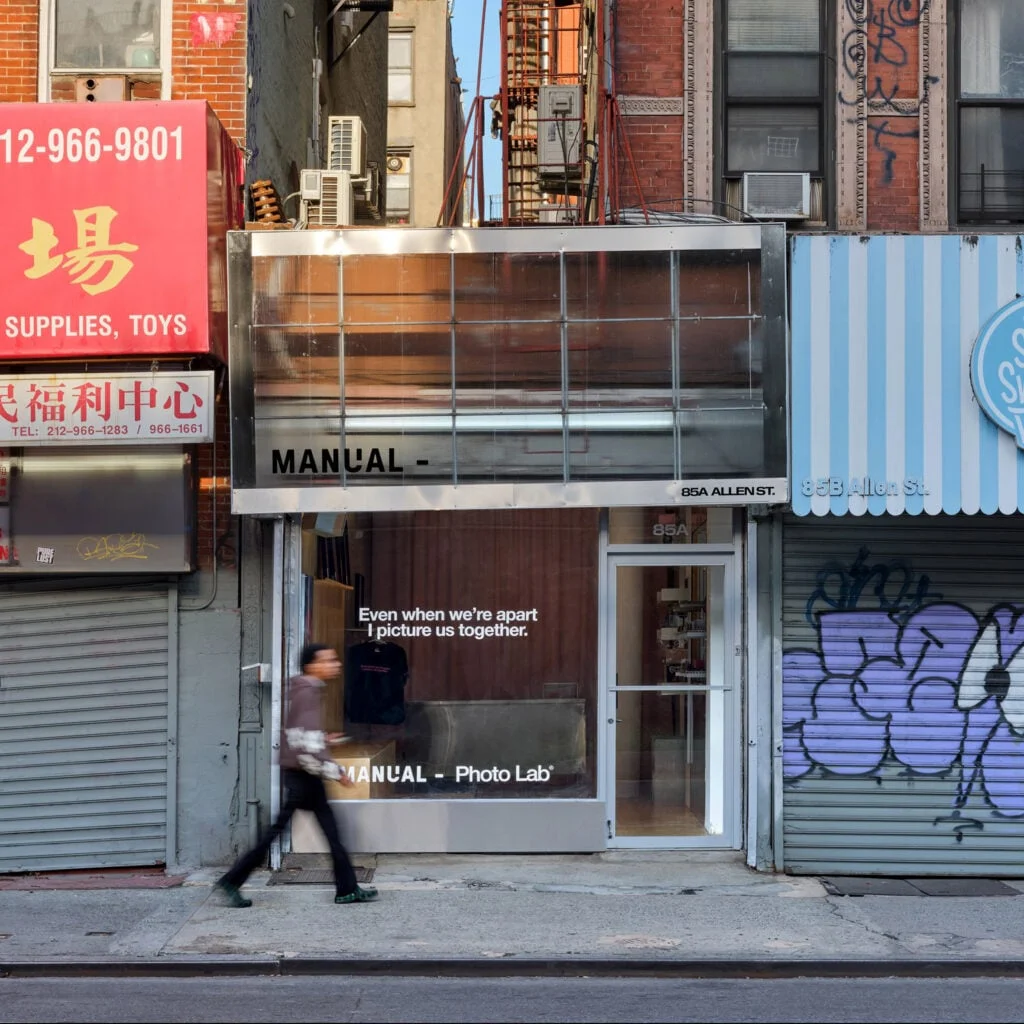
The Manual Photo Lab turns a camera brand’s first permanent shop into something more social than a standard retail counter. In Chinatown, customers can pick up a camera, shoot with it, return for film processing and stay to spend time with other photographers. That combination is the point: the shop is designed as a place to gather, as well as a place to buy.
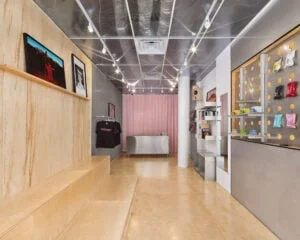
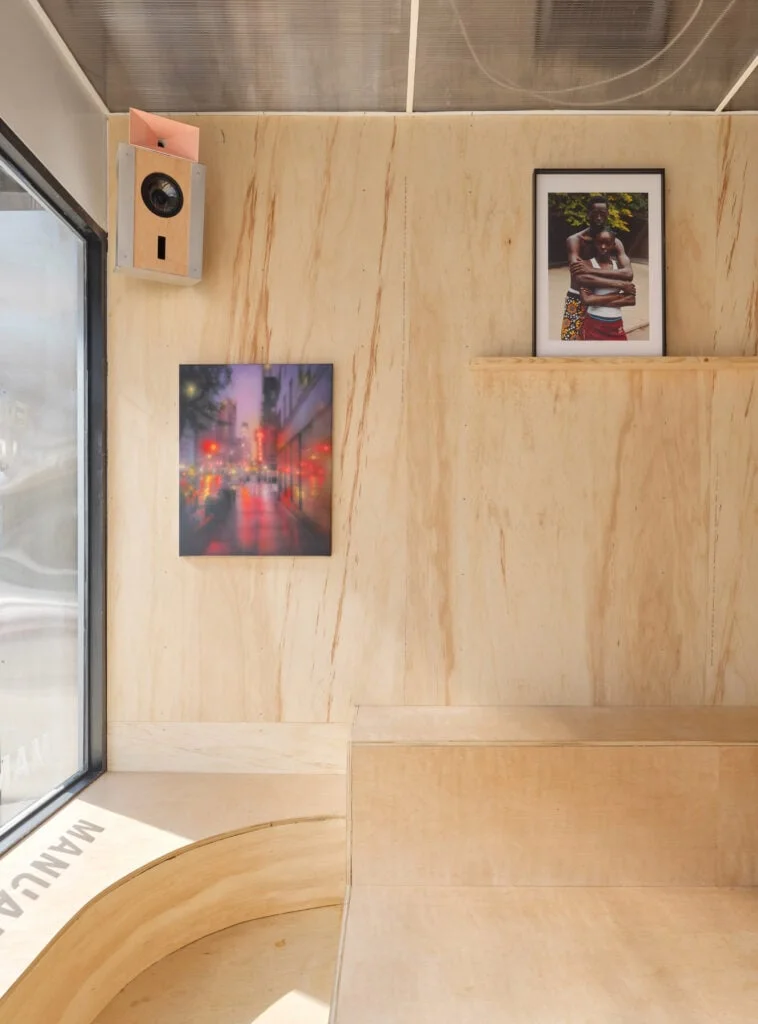
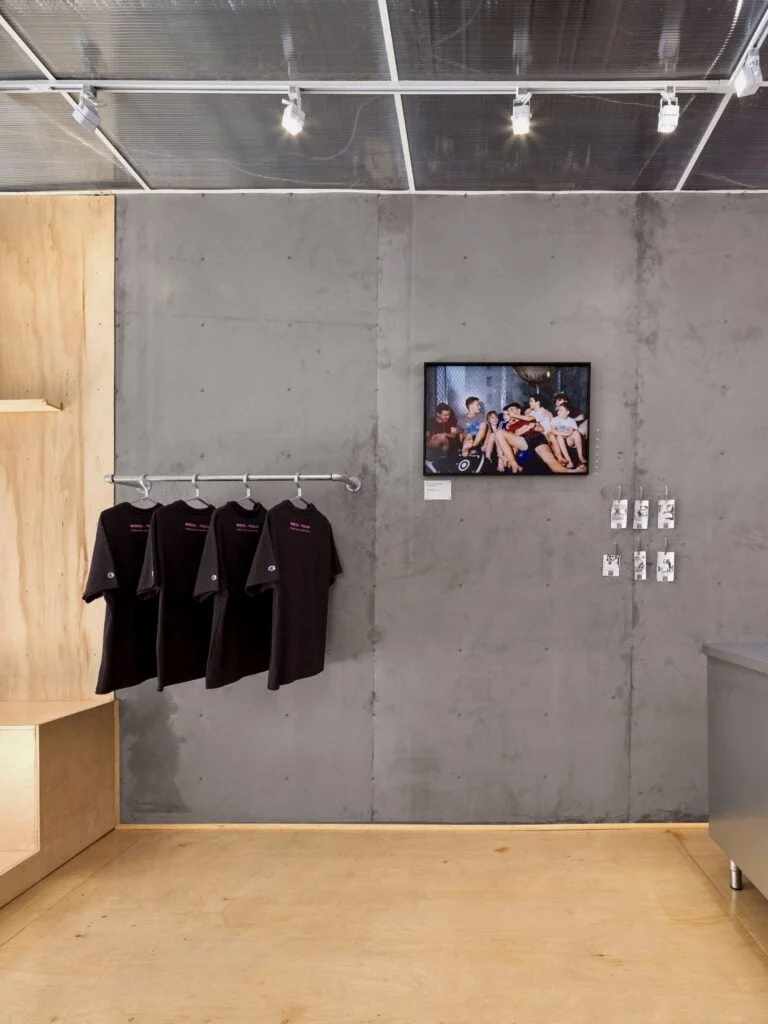
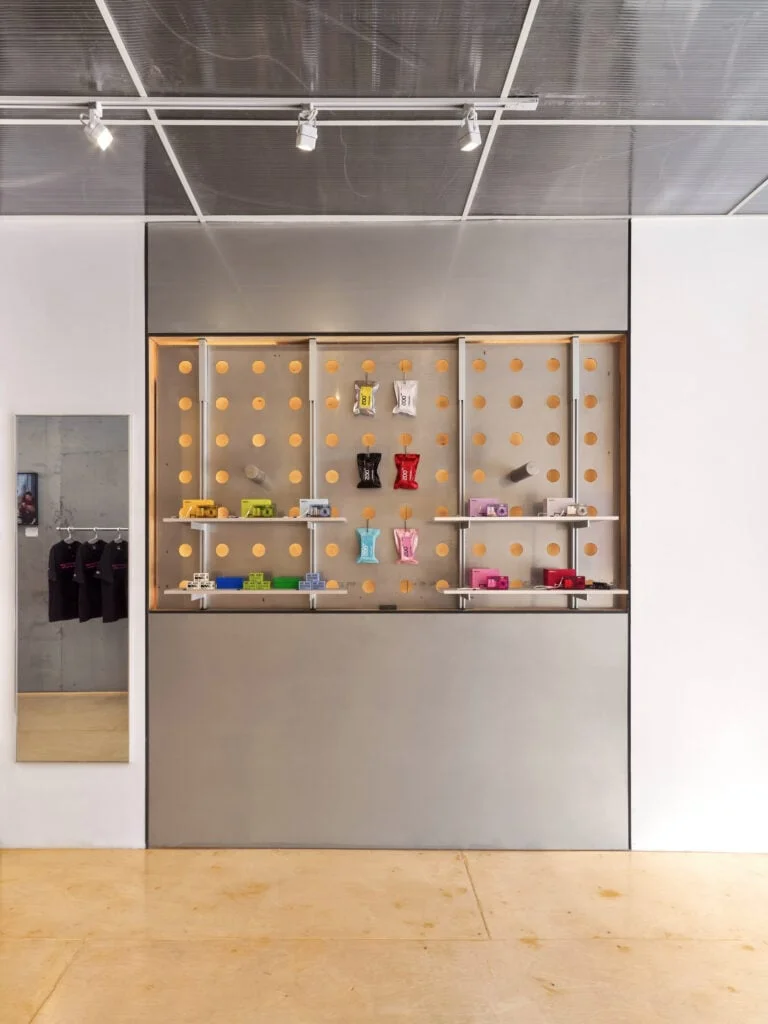
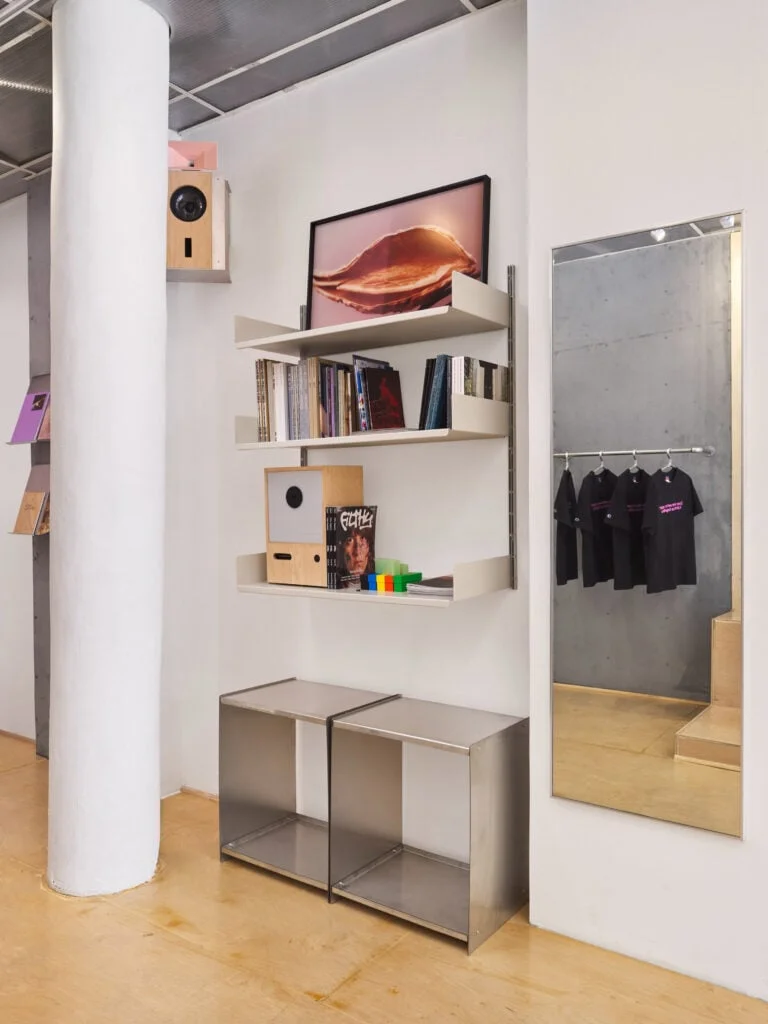
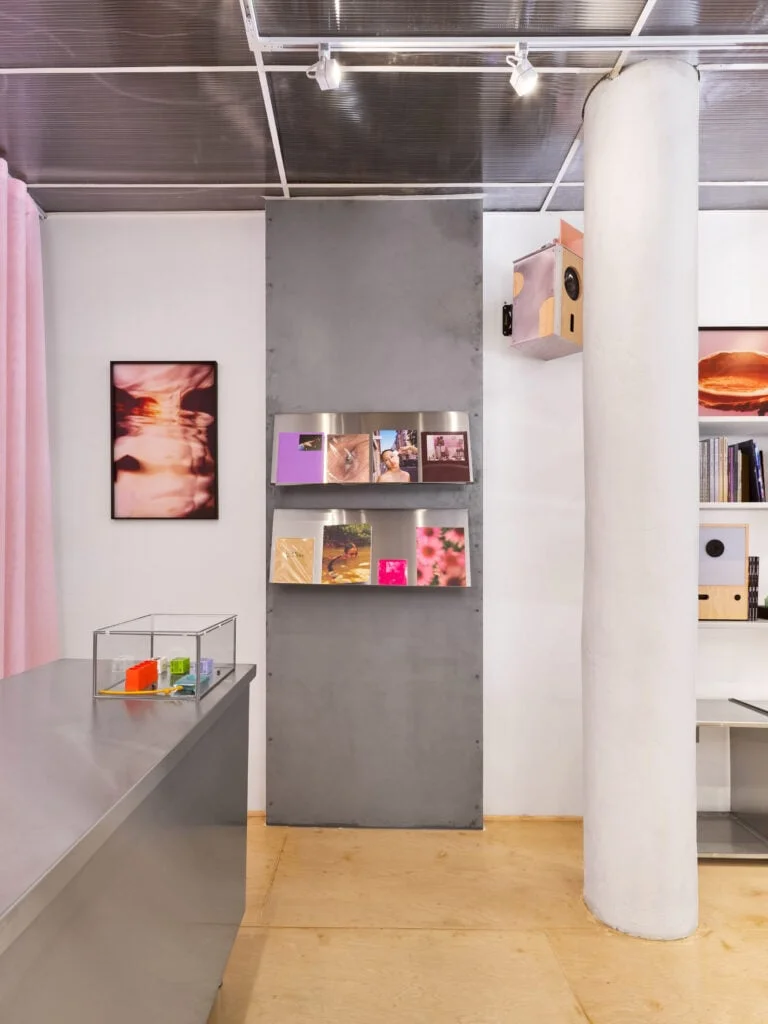
Design-build studio Protean Practice and camera company Manual developed the store around that idea, using plywood seating, reflective metallic surfaces and baby-pink details. Manual founder Malcolm Dia described the intended rhythm to Dezeen: “pull up in the morning, grab a camera, go live your life, and then come back, get it developed and hang out”.
Dia calls the shop a “home base for photographers.” One side displays products and offers ideas for customers to explore; the other is set aside for relaxing. He compared the approach to a skate shop, where the draw can be the community as much as the goods. That’s a more ambitious role for a camera retailer, though the design alone can’t guarantee the gathering will happen.
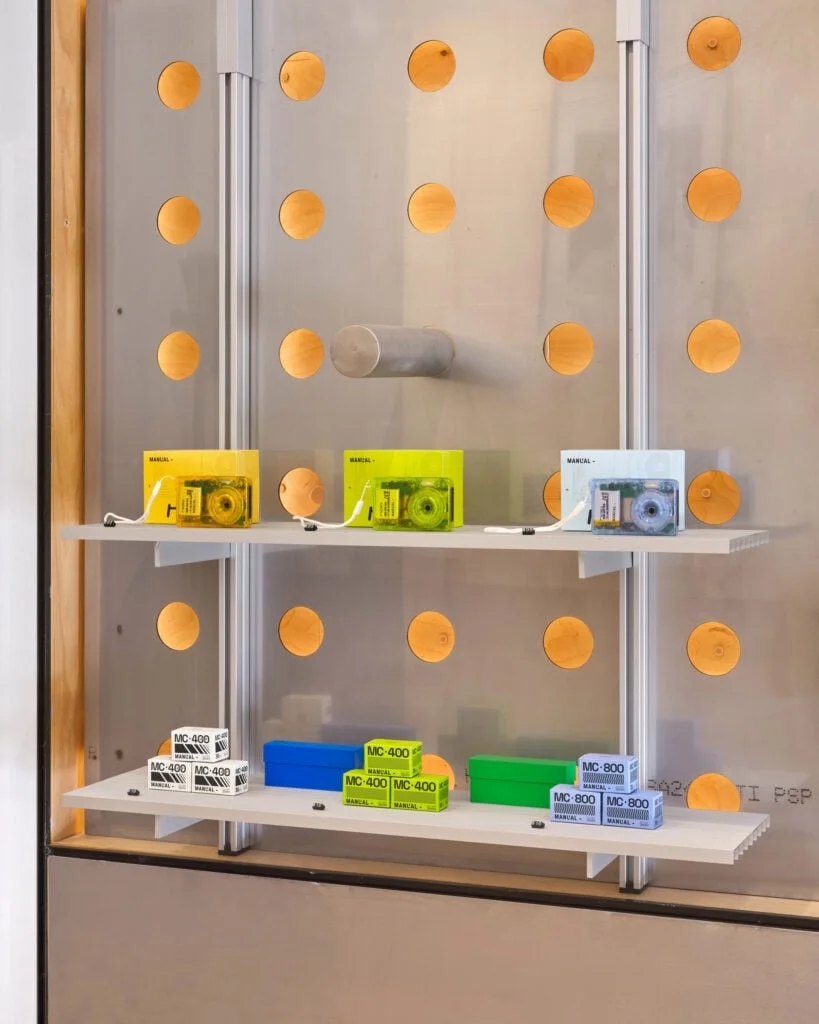
Manual, founded in 2017, makes the pocket-sized translucent Holo digital camera, along with disposable cameras and film. Before opening the Chinatown location this past month, the company had relied on pop-ups. The new shop also processes film, making it both the brand’s first permanent storefront and a working lab.
A storefront that shows its history
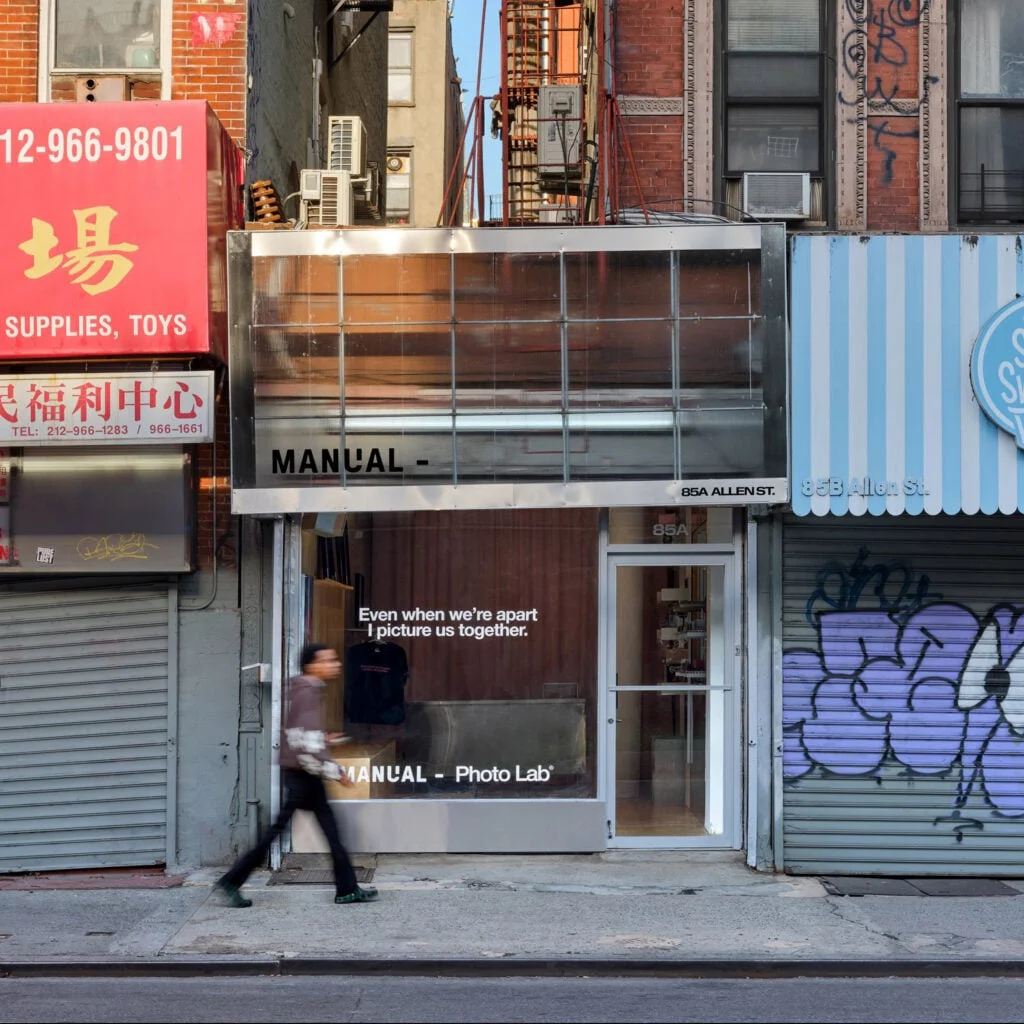
The shop sits on Allen Street in a former point-of-sale supply store. Retail occupies the front; a pink curtain screens the lab’s work at the rear. From outside, floor-to-ceiling glass meets a translucent polycarbonate bulkhead. The material lets the building’s old brickwork show through, while the store name appears in plain black lettering.
That translucent skin also echoes the Holo camera’s coloured plastic shell, which reveals internal parts such as its battery. Protean Practice co-founder Saji Abu-Gold told Dezeen that the camera informed the choice of polycarbonate for both the facade and the interior ceiling. It’s a useful connection between product and place: the storefront borrows the camera’s openness without turning the brand reference into a literal display.
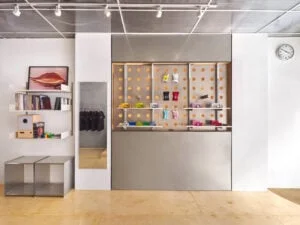
The designers also retained part of the previous storefront rather than replacing it wholesale. They removed its outer covering, kept the original structural frame and fitted polycarbonate panels into it. The result makes the shop’s new identity visible while leaving traces of the building’s earlier life.
A shop designed to make people stay
The restoration of a fluorescent light behind the original bulkhead captures the project’s approach: keep what the layers of later signage had hidden, then let the old structure do some of the work. When the team stripped away vinyl and a giant neon sign, it found an uneven but appealing frame beneath. At night, light through that frame refracted like a flashlight shining through the plastic of a Holo camera, a happy effect the team discovered only after installation.
A first stop for new film photographers
Dia said Manual is aimed at people picking up a camera or a roll of film for the first time. The shop isn’t looking to take business from neighbourhood labs such as Sammy Photo Lab and Elize Digital. The latter recently drew attention for its passport pictures, as Gothamist reported. Abu-Gold described the ambition as making a place for the next generation: “the kids who come down the street and pick up their digital camera or roll of film for the very first time.”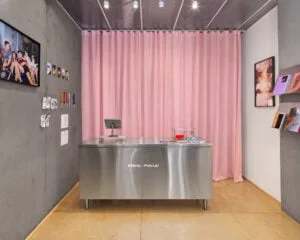
Project credits:
Design: Saji Abu-Gold
Creative direction: Manual
Construction lead: Agim Lamaj
Millwork collaborator: Matthew Avoletta
Stainless peg wall: Ian Chapin
Sound system: Lupo
The post Manual's camera shop in New York is imbued with "philosophy of skate shop" appeared first on Dezeen.
Discussion
Sign in to join the discussion.