Marcus & Millichap announces the sale of a 4,824-square-foot 7-Eleven property in Walterboro for $9.5 million, signaling strong retail market activity.
Walterboro, S.C. — A newly developed gas station and convenience store, featuring a 7-Eleven outlet along with a CAT Scale weigh station, has been sold for $9.5 million in Walterboro. The property spans 4,824 square feet and was brokered by Marcus & Millichap. Key players in the transaction include Haris Hanifi and Robert Filley, who represented the buyer, while Benjamin Yelm served as the broker of record for the firm in South Carolina.

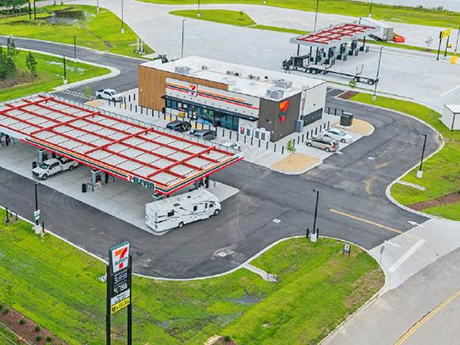
7-Eleven and a CAT Scale weigh station occupy the 4,824-square-foot, single-tenant retail property located at 101 Joseph Flowers Road in Walterboro, South Carolina.
Property Overview and Unique Features
The recent transaction in Walterboro involved a specialized retail property that blends both a convenience store and a weigh station, catering primarily to both local and transient consumers. Located at 101 Joseph Flowers Road, the 4,824-square-foot space isn't just an ordinary gas station. It features a 7-Eleven outlet, widely recognized for its convenience offerings, alongside a CAT Scale weigh station designed for trucks and commercial vehicles.
For operators in the gas station and retail space, the combination of these two functionalities can enhance customer traffic substantially. Weigh stations are particularly valuable in areas frequented by long-haul truck drivers, providing essential services while they refuel. This dual-purpose setup taps into both routine local consumers and the more specialized needs of regional transport industries.
Market Context and Trends
The sale of this property for $9.5 million reflects broader regional trends in commercial real estate, particularly the growing demand for multi-functional retail services. Areas experiencing population growth tend to see increases in traffic, which are attractive to businesses that cater to both everyday needs and specialized services.
Southern states, in particular, have shown resilience in commercial real estate even amid fluctuating economic conditions. The increasing reliance on convenience has been compounded by changing consumer behaviors—more people are opting for quick stops that meet multiple needs, rather than single-purpose locations.
If you’re working in this space, understanding these dynamics can give you an edge. Properties featuring essential services like gas stations or eateries often realize higher property values, as they attract a diverse customer base. The 7-Eleven brand, coupled with a weigh station, aligns with this trend perfectly.
The Role of Brokers in the Transaction
Marcus & Millichap played a pivotal role in brokering this deal. They are well-established in the field of commercial real estate, often managing transactions for specialized retail properties. The transaction was facilitated by brokers Haris Hanifi and Robert Filley. Their experience brought significant value to the negotiation process, particularly in understanding local market nuances.
Brokers like Benjamin Yelm, who acts as the broker of record in South Carolina, offer not just transactional expertise but also insights into regional market conditions. They have access to a wealth of market data that can aid buyers and sellers alike in making informed decisions. In this case, securing a high price signal suggests their strategies were effective, likely capitalizing on the area's potential for growth.
Timing and Future Implications
The timing of the sale also raises questions about broader economic conditions. If the commercial real estate market were facing headwinds, one might expect lower transaction prices or increased vacancies. Instead, the solid sale price in a niche market segment suggests a level of confidence among investors.
What this means for you, if you're involved in commercial real estate, is that there remains a strong appetite for well-located retail properties serving the essential needs of the community. This appetite could very well continue, especially in regions where transportation hubs are situated.
Consider the implications of rising construction costs and evolving consumer preferences. Properties like the one in Walterboro may become even more valuable as they cater to the evolving dynamics of commerce and transportation. The stability in sales price could indicate a future trend where mixed-use facilities gain prominence in the commercial landscape.
This intersection of retail and service-oriented facilities presents opportunities not only for buyers and investors but also for developers looking to engage with the market's future needs.
Beyond Walterboro: Comparable Cases
Examining similar properties across the South can offer insights into potential trends. In many cases, gas stations integrated with convenience stores or fast-food outlets have seen increases in consumer traffic. For example, multi-chain venues have successfully launched in nearby areas, effectively combining services that cater to evolving consumer behaviors.
The presence of weigh stations isn't unique to South Carolina; many states with significant transportation routes also offer similar setups. These comparative markets show a consistent demand for such facilities, which act as pivotal touchpoints for both residents and traveling patrons alike.
In essence, the sale of this facility could be a reflection of a broader movement — one where the need for convenience shapes investment strategies.
Significance of the Deal
The deal's significance stretches beyond its apparent monetary value. It speaks to current consumer habits that lean heavily towards convenience. With increased travel, particularly in Southern states, the demand for dual-purpose facilities like the one in Walterboro stands poised to grow.
It's telling. Multi-functional facilities tend to weather economic changes better than single-purpose sites. Investors often view them as less risky, given their diversified customer bases. This is where the future lies. And avid observers of the commercial property scene might view the $9.5 million price tag not just as a standalone figure, but as a signal of the market’s ongoing resilience and adaptability.
In real-estate terms, this sale could represent a bellwether, showcasing a trend that others may soon follow.
Discussion
Sign in to join the discussion.